
By Chen Ziqi, CGTN
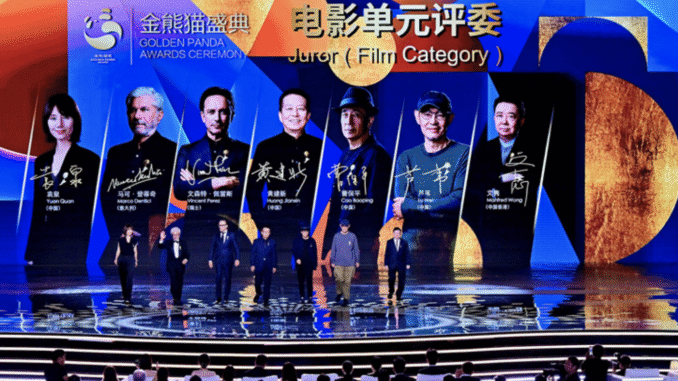
Chengdu, famed for its pandas and fiery cuisine, took the spotlight from September 12–13 as it hosted the 2nd Golden Panda Awards, drawing filmmakers and cinephiles from around the world to celebrate storytelling in all its forms.
And this year, there was a special guest of honour: Italian cinema. The festival is marking 55 years of diplomatic ties between China and Italy with screenings of both contemporary gems and timeless classics, a cultural bridge built through film reels and subtitles.
True to its name, the Golden Panda Awards borrow China’s favourite furry ambassador as a symbol of friendship and cross-cultural connection. Around 65 works have been shortlisted, with 27 awards to be presented across four categories: Film, TV Series, Documentary, and Animation. Notably, 54.5% of the finalists are international productions, selected from 5,343 entries submitted from 126 countries and regions.
One of the standout contenders this year is the Italian film The Last Time We Were Children, which is nominated for Best Director, Best Screenplay, and Best Actress in Supporting Role.
Set in Rome in 1943 during the World War II, the story follows three youngsters on a mission to rescue their Jewish friend, who has been taken by the Nazis. Along the way, they gradually come to face the harsh and devastating realities of war.
The film marks the directorial debut of Claudio Bisio and is adapted from Fabio Bartolomei’s 2016 novel of the same title. Bisio said he laughed and cried while reading the book, which inspired him to bring the story to the screen. “It was an incredible and emotional adventure,” he reflected, noting that the filmmaking process offered him new insights into humanity, history, and storytelling, while also fostering his growth as a filmmaker.
At the heart of the film lies a striking contrast: the loyal friendship of children barely ten years old, warm, innocent, and full of imagination, set against the brutal and heart-wrenching reality of war. Through the eyes of these youngsters, the story delicately explores not only the history of conflict but also questions of social values, gender inequality, and the complexity of human nature.
Although the four children come from very different family backgrounds, they are united by loyalty, courage, and the bonds of friendship. The film includes touches of Italian comedy, but nothing is more heartbreaking than witnessing the purest innocence shattered by the cruelest fate, especially when those living it remain unaware of the tragedy unfolding around them.
Life’s bitterest reality is that it comes but once, never to be repeated. For these children, this is both their first and their last time to truly be children. The film not only moves the heart, but also reminds audiences of the preciousness of peace, compassion, and our shared humanity.
In addition to this nominated film, audiences can experience iconic Italian cinema throughout September as part of the 2nd Golden Panda Awards, including The Legend of 1990 (1998), Yesterday, Today, and Tomorrow (1963), and The Garden of the Finzi-Continis (1970), in celebration of the 55th anniversary of diplomatic ties between China and Italy.
Beyond celebrating award winners, the Golden Panda Awards serve as a dynamic hub for international film professionals to exchange ideas and explore potential collaborations. Judges, creators of nominated works, and influential directors, producers, actors, and experts from home and abroad come together for in-depth discussions on topics ranging from digital-intelligence empowerment to the art of light and shadow. Collaborative dialogues, exhibitions, and new project launches further expand opportunities for creative partnerships.
This September, Sichuan Province transforms into a cinematic playground with events called “Let’s Watch Films Together,” where film lovers can dive into a feast of stories, local culture, tantalizing cuisine, and unforgettable travel experiences.
Picture this: start the day with an award-nominated documentary, enjoy a bowl of noodles for lunch, and end it at a riverside night market where films play on a giant outdoor screen. The whole province turns into an open-air cinema, with 50,000 screenings spread across 10 landmarks, 5 universities, lively streets, and even a night market.
To give filmgoers a full sensory adventure beyond the screen, travel Vloggers and food influencers have joined the celebration, sharing 14 recommended travel routes that let audiences explore the real-life locations and savor the local cuisines behind the stories.
What’s more exciting is film viewers can unlock special perks by showing their ticket stubs, enjoying discounts at select hotels, restaurants, and tourist attractions across the province. So far, more than $5.6 million in film discount coupons have been handed out, making the festival a feast for both the eyes and the wallet.
So whether you’re a director hunting for your next big collaboration, a movie buff chasing screenings across temples and night markets, or just a foodie looking for an excuse to binge dumplings between films, Chengdu’s festival has you covered. Because here in Sichuan, cinema isn’t just about sitting in the dark with popcorn; it’s about stepping into the light, onto the streets, and into a world where stories, cultures, and people connect.