By Alberto Macchione
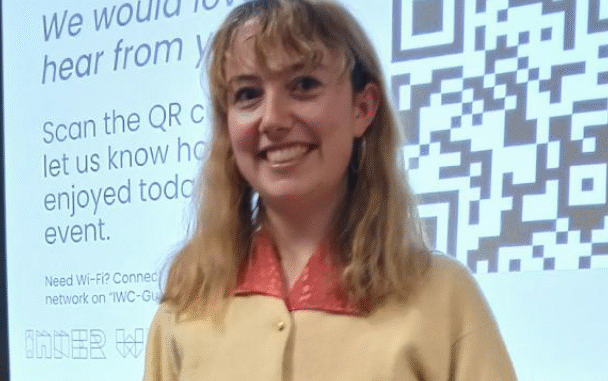
Lily Patchett held a discussion in Sydney’s ‘Little Italy’ at Leichhardt Library’s ‘Reading Between the Lines’ book presentation. The hour-long presentation was based around Elena Ferrante’s The Lost Daughter. Although Patchett invited community members to join the discussion on the 2006 novel she was quick to say that if people were “too shy” to participate that she could “speak about Ferrante forever”.
The “roadmap” for the evening as Patchett surmised it was to touch on the psychoanalytical and feminist roots with key themes like mother-daughter relationships, trauma and language, and how they resonate across Ferrante’s body of work and in our contemporary culture.
Responsible for producing the universally recognised Greatest Novel of the 21st Century, the enigma of author Elena Ferrante remains. The fact that no one knows for certain who Elena Ferrante is, prompted Patchett to open with that very question. Audience members at the discussion postulated that it likely be a lady but could also be a man or a collaboration of writers. Patchett described Ferrante as an author who doesn’t “go to literary festivals. She doesn’t do in person interviews, but (as being) very present in her novels”.
Pratchett speaks of Ferrante’s unusual voice as an author suggesting that she uses lots of “neologisms like ‘frantumaglia’ that she says is from her mother’s dialect”. Patchett also suggests that Ferrante whose work is very authentically Neapolitan is “very much steeped in the history of Italy and Italian culture”.
The intrigue in Ferrante’s identity was explained by Patchett who said that Ferrante had her anonymity written into her contract and would not allow any photographs to appear on the book. This theme of an unanswered mystery becomes a theme throughout the discussion as Patchett highlights the mysteries around characters and their relationships and in particular as they related to The Lost Daughter.
Patchett went on to say that Ferrante’s novels are “often presented as romances or they look like psychological thrillers. But then they break down those stereotypes and those genres.”
Patchett broke down the title, characters and story of the Lost daughter in great detail and examined them. The feminist theories exposed throughout the work and through all of Ferrante’s work, spoke to the idea of ‘Difference Feminism’. Patchett went on to explain this through Ferrante’s point of view; “I have loved and I love feminism, because in America and Italy and many other parts of the world, it managed to provoke complex thinking. I grew up with the idea that if I didn’t let myself be absorbed as much as possible into the world of imminently capable men, but I did not learn from my cultural excellence. If I did not pass brilliantly all the exams that the world required of me, it would have been countermount to not existing at all. Then I read books that exalted the female difference, and my thinking was turned upside down. I realized that I had to do exactly the opposite. I had to start with myself and with my relationships with other women. This is another essential formula if I really wanted to give myself a shape”.
Lily Patchett is a PhD candidate in Italian Studies at the University of Sydney. Her thesis is on the role of mysticism in Elena Ferrante’s female symbolic, which she traces to three of her most prominent influences: Elsa Morante, Anna Maria Ortese, and Clarice Lispector. Patchett also teaches in Philosophy, English and Writing, Italian Studies.