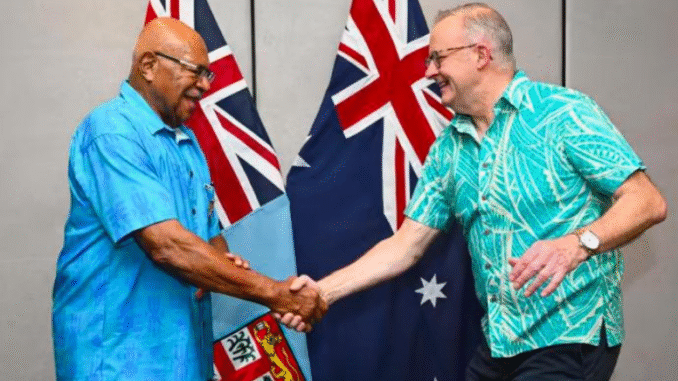
Australia’s $2.2 billion annual aid commitment to the Pacific is more than a gesture of goodwill—it’s a calculated response to a rapidly changing world. As the largest and most comprehensive donor in the region, Australia is stepping up at a time when other traditional partners, like the United States, are retreating. This shift isn’t just about filling a funding gap; it’s about ensuring the stability and security of Australia’s own backyard.
Critics argue that Australia’s aid-to-GNI ratio remains stubbornly low, hovering around 0.18%, well below the UN’s recommended 0.7%. By international standards, this places Australia among the least generous of OECD donors. But the reality is more nuanced.
The Pacific faces unique challenges: rising sea levels, economic fragility, and growing geopolitical competition, especially from China. Australia’s aid, targeted at health, climate resilience, and economic development, is as much about national interest as it is about regional solidarity.
The recent redirection of $119 million to plug gaps left by US aid cuts highlights how quickly priorities can shift. Programs addressing HIV, climate disasters, and economic resilience are now front and centre. This isn’t just charity; it’s an investment in the future of a region that is inextricably linked to Australia’s own security and prosperity.
Is Australia’s Pacific aid justified? Absolutely. In a world where instability spreads quickly, supporting vulnerable neighbours is not just morally right—it’s strategically smart. However, while the government deserves credit for its focus, it could do more. With inflation eating into real spending and many Pacific nations facing existential threats, Australia has the capacity—and the responsibility—to lift its game.
The Pacific needs a genuine, long-term partnership, not just the leftovers of budget debates. In short, Australia’s aid is both necessary and justified, but there’s always room to aim higher, if not smarter.