Francesco Papandrea Raises the Alarm for a More Transparent and Democratic CGIE
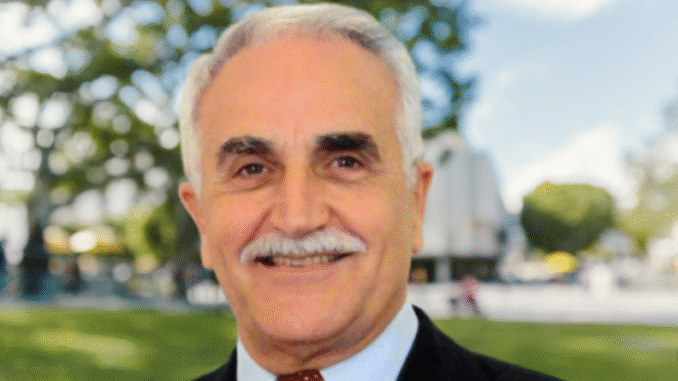
In the often stagnant waters of institutional representation for Italians abroad, every so often, a voice emerges to break the silence and call things by their name. This time, it is the voice of Francesco Papandrea, CGIE councillor representing Australia, who on the second day of the Plenary Assembly firmly and clearly denounced the internal dysfunctions of the Consiglio Generale degli Italiani all’Estero (General Council of Italians Abroad).
At the halfway point of the current mandate, Papandrea painted a bleak picture of the CGIE’s performance: “There is no strategic or structured work plan,” he declared, pointing out that the three priority areas on which the council was supposed to focus have yielded no tangible results. His statement hit like a punch to the gut for those who believe in the mission and value of the CGIE, raising questions that can no longer be ignored.
Papandrea didn’t stop at general criticism. He took direct aim at a governance structure he described as paralyzed, unable to make meaningful decisions and—according to him—trapped in opaque dynamics. “The reports from the Presidency Committee are numerous but devoid of content,” he said, stressing how form has now overtaken substance. He added sharply: “We are hostages to political interests,” and “positions are handed out to friends.” Strong words, no doubt, but necessary ones that place the institution’s credibility squarely in the spotlight.
Papandrea’s denunciation reflects a broader discontent within the CGIE, increasingly seen as a self-referential bureaucratic machine more concerned with maintaining internal balances than truly serving the community it represents. Centre-right councillors—including Bocaletti, Stabile, and Arcobelli, in addition to Papandrea—have openly criticised what they see as a personalized management of the Presidency Committee and commissions being used for personal political ambitions. These are serious accusations that cannot be dismissed as mere electoral posturing.
Beyond political differences, what clearly emerges is a call for change. Papandrea is urging a transparent, inclusive, and accountable governance, one that “restores sovereignty to the plenary assembly” and returns the CGIE to its original role: as a bridge between Italian institutions and communities around the world. This is not a personal attack—it is a political and democratic demand. Such an important body cannot continue to be perceived as ineffective, opaque, or even useless.
The response from Secretary General Maria Chiara Prodi was formal and avoided addressing the core of the accusations. She chose “not to engage with personal criticisms” and instead promised to respond “point by point.” But perhaps the time has come to go beyond mere replies: what’s needed now is to listen, involve, acknowledge the problems, and change direction.
Those who, like Papandrea, have the courage to speak out against dysfunctions should not be isolated or belittled—they should be heard and supported. Because if we truly want the CGIE to once again serve Italians abroad, we must start here: with truth, with transparency, with the courage to break the silence.
If not now, when?