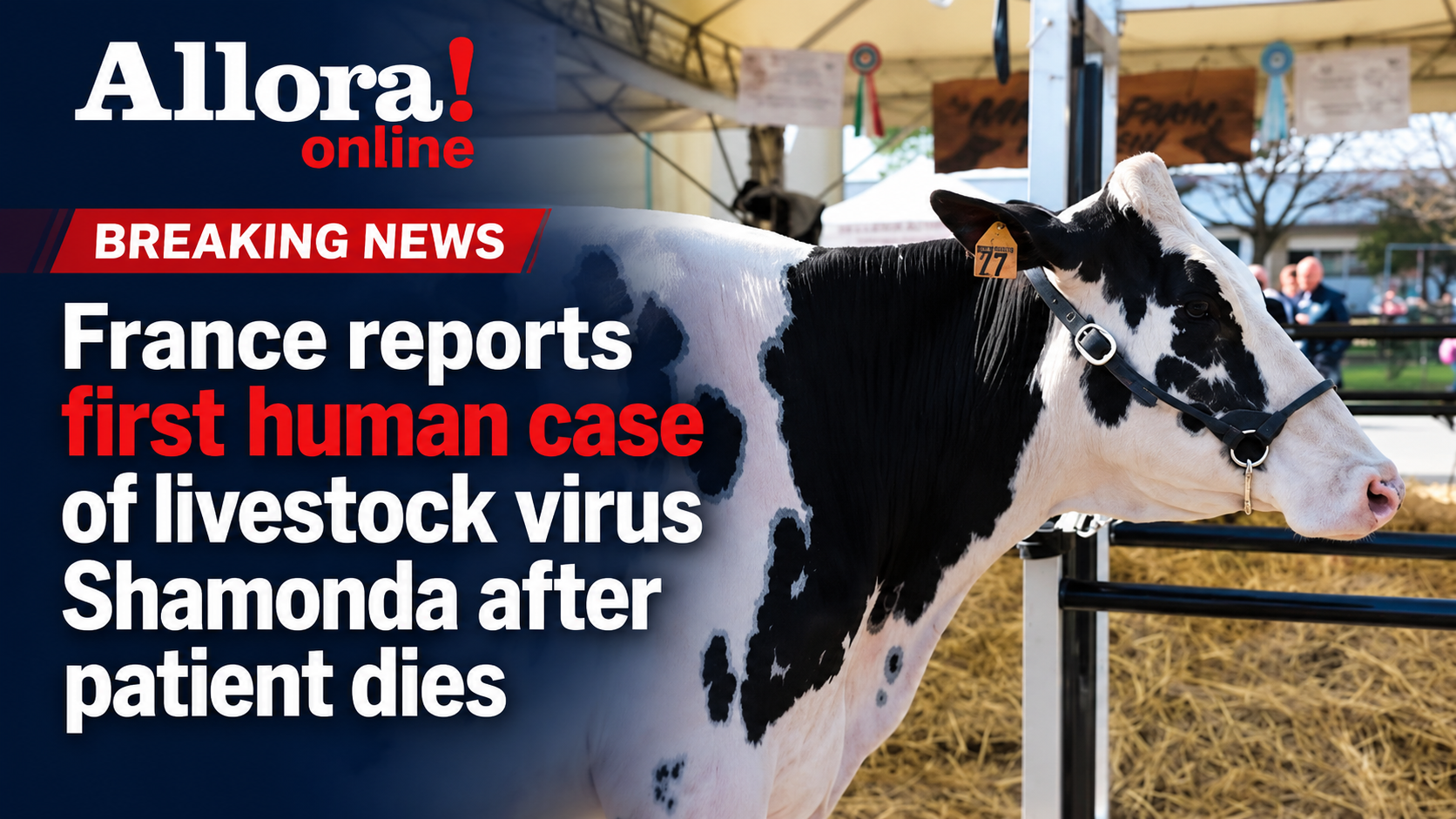
A virus previously known to infect livestock has been detected in a human for the first time, raising new scientific questions after a severely immunocompromised patient died in France. Health authorities insist there is currently no identified threat to the general population.
French health authorities have confirmed the world’s first documented human infection with the Shamonda virus, a pathogen traditionally associated with cattle and other farm animals.
The announcement, made on Thursday, October 22, follows the death of a patient who had been receiving treatment for a serious underlying medical condition at the Hospices Civils de Lyon hospital complex.
According to French authorities and the European Centre for Disease Prevention and Control (ECDC), the patient died in early October. Investigations are continuing to establish whether the infection caused or contributed to the death.
French newspaper Le Progrès identified the patient as a man in his 60s living in the Lyon area.
The case represents a significant development in understanding a virus that, despite circulating among livestock for more than six decades, had never previously been documented in humans.
How did the infection occur?
French investigators believe the patient may have contracted the virus through the bite of an infected biting midge, a tiny blood-feeding insect belonging to the Culicoides genus.
The suspected exposure occurred in eastern France, where the virus had circulated among farm animals during the spring and summer of 2026.
The patient’s severely weakened immune system may have increased susceptibility to infection and serious complications.
French authorities have indicated that neurological complications observed before the patient’s death were very likely associated with the Shamonda infection. However, the precise contribution of the virus to the fatal outcome remains under investigation.
Clinical, laboratory and epidemiological investigations are being conducted to determine the circumstances of transmission and assess the potential implications for human health.
WHO says wider spread is unlikely
The World Health Organization (WHO) has confirmed that it is in contact with French authorities and is closely following developments.
Based on available scientific evidence and knowledge of related viruses, the organisation considers this an isolated human infection, with wider transmission currently considered unlikely.
French authorities have similarly stressed that no health risk to the general population has been identified at this stage.
The ECDC is coordinating with European public health institutions and laboratory networks to strengthen testing capabilities and support the investigation.
Despite the exceptional nature of the case, health officials have not announced any emergency measures for the wider population.
What is the Shamonda virus?
Shamonda belongs to the Orthobunyavirus group and was first identified in Nigeria during the mid-1960s.
It has historically circulated among livestock in parts of Africa and Asia, primarily affecting cattle, although infections have also been identified in sheep, goats, horses and alpacas.
The virus is transmitted among animals through the bites of infected midges.
In cattle, reported symptoms include diarrhoea, weakness, loss of appetite and, occasionally, fever.
The disease can also have significant economic consequences for farmers. Research involving nine French dairy farms found that milk production declined by as much as 75% in some affected operations.
Until this year, Shamonda had not been confirmed in European livestock.
Its first European detections came in July 2026 following laboratory investigations involving sick cattle in Germany, Switzerland and eastern France.
Since then, infections have been identified in numerous European countries, including Italy, Spain, Ireland, Belgium, Austria and the Netherlands.
The virus is not currently classified as a regulated animal disease under the European Union’s Animal Health Law, meaning it is not subject to the same mandatory control and surveillance requirements as certain other livestock infections.
A new challenge for European health authorities
The discovery of the first human infection has introduced an additional dimension to European surveillance efforts, particularly as the virus has become established in livestock populations across several countries.
Scientists are now seeking to establish whether the infection represents an extremely rare event involving a particularly vulnerable patient or whether additional, previously unrecognised human infections may have occurred.
These questions remain unanswered, and there is currently no evidence establishing a wider human outbreak.
European health officials have also noted that biting midge activity generally declines as temperatures fall during autumn, potentially reducing opportunities for vector-borne transmission in the coming months.
The investigation is following the One Health approach, which brings together human medicine, veterinary science and environmental expertise to examine diseases that can affect both animals and people.
The discovery highlights the importance of understanding how animal pathogens interact with humans, particularly as infectious diseases emerge in new geographical areas.
For now, European and international health authorities continue to monitor the situation while emphasising that this remains a single documented human case, with no identified risk to the general population.
The central questions remain how the patient became infected, whether the virus contributed directly to the death, and what the discovery could mean for future surveillance of animal-borne infections.
Allora! Online – International Health News
Based on reporting by Reuters and statements from French health authorities, the European Centre for Disease Prevention and Control and the World Health Organization.