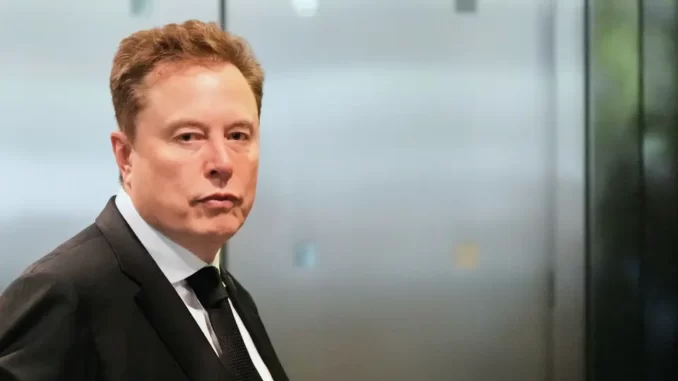
The courtroom battle between Elon Musk and Sam Altman was never just about a lawsuit.
It was about power.
About control.
About who gets to shape the future of artificial intelligence — and ultimately, perhaps, humanity itself.
On Monday, a federal court in Oakland, California dismissed Musk’s claims against OpenAI and its leadership, delivering a major legal and symbolic victory to Altman and the company behind ChatGPT.
The jury concluded that Musk had waited too long to file the case and missed the statute of limitations deadline. Judge Yvonne Gonzalez Rogers accepted the advisory verdict and formally dismissed the claims.
Legally, it may have been a procedural defeat.
Politically and culturally, however, the trial exposed something far larger: the collapse of one of Silicon Valley’s most important alliances and the transformation of artificial intelligence from an idealistic research project into the most powerful commercial race on Earth.
From nonprofit dream to $852 billion empire
When OpenAI was founded in 2015, it was presented almost as a philosophical movement.
Musk, Altman and a small circle of technologists claimed they wanted to build artificial intelligence safely, transparently and for the benefit of humanity — not for profit.
The fear at the time was simple but profound: if superintelligent AI were controlled by a single corporation or government, the consequences could become catastrophic.
Ironically, that exact fear now sits at the center of Musk’s accusations.
According to the lawsuit, Musk argued that OpenAI betrayed its founding mission by transforming itself into a commercial powerhouse driven by money, valuations and corporate partnerships. He accused Altman and senior executives of abandoning the nonprofit vision behind closed doors while enriching themselves as the company exploded in value.
OpenAI is now reportedly valued at around $852 billion, making it one of the most powerful technology companies in modern history.
What began as an ethical research lab has become the epicenter of the global AI revolution.
And Musk believes it was stolen.
During testimony, he reduced the entire legal battle to one sentence:
“It’s not OK to steal a charity.”
The war between two visions of AI
At the heart of the trial was not simply personal bitterness, but a philosophical divide over artificial intelligence itself.
Musk increasingly portrays AI as an existential risk that could spiral out of human control if concentrated in too few hands.
Altman, meanwhile, represents a more pragmatic Silicon Valley approach: rapid deployment, massive scaling and commercial partnerships designed to accelerate development before competitors dominate the field.
The irony is impossible to ignore.
Musk helped create OpenAI because he feared centralized AI power.
Today, he accuses OpenAI of becoming exactly what it was created to prevent.
OpenAI’s defense was equally blunt.
The company argued there was never any permanent promise to remain a nonprofit organization forever and claimed Musk’s lawsuit was driven less by ethics than by rivalry — especially after Musk launched his own competing AI company, xAI, in 2023.
In other words, OpenAI portrayed Musk not as a betrayed founder, but as a competitor trying to slow down a rival.
A courtroom full of Silicon Valley royalty
The trial itself became a rare public glimpse into the inner workings of the AI industry.
Witnesses included Altman, OpenAI co-founder Greg Brockman, Satya Nadella and former OpenAI board members involved in Altman’s dramatic firing and reinstatement in 2023.
That episode — one of the most chaotic moments in tech history — hung heavily over the proceedings.
Musk claimed OpenAI leadership had engaged in deceptive conduct.
Former board members described tensions over governance and control.
Altman testified that one of OpenAI’s original goals was specifically to prevent artificial general intelligence from falling under the control of a single individual.
The implication was clear.
That individual, in Altman’s view, may have been Musk himself.
“Part of the reason we started OpenAI,” Altman said, “is we didn’t think AGI could be under the control of any one person.”
It was one of the most revealing moments of the trial.
Because beneath the legal arguments lies a brutal reality: the fight over AI is increasingly becoming a fight between billionaires, corporations and governments competing to dominate the next phase of civilization itself.
The end of Silicon Valley idealism?
Perhaps the most striking aspect of the case is what it says about modern technology culture.
A decade ago, Silicon Valley often presented itself as idealistic.
Tech leaders spoke about openness, collaboration and changing the world for the better.
Now the language is different.
Valuations.
Market dominance.
Compute power.
IPO strategies.
Control over foundational models.
OpenAI’s transformation mirrors the transformation of the tech industry itself: from utopian ambition to geopolitical and financial power.
And Musk’s defeat may symbolize something even bigger.
The age when AI could remain a purely nonprofit or idealistic endeavor may already be over.
Developing frontier artificial intelligence now requires extraordinary amounts of money, infrastructure and political influence. That reality inevitably pulls AI toward corporate concentration and state-level competition.
In that environment, ethical promises often collide with economic survival.
The real battle is only beginning
Despite the courtroom defeat, Musk is unlikely to stop attacking OpenAI publicly.
The feud between Musk and Altman has become personal, ideological and strategic all at once.
And beyond their rivalry lies the bigger unanswered question:
Who should control artificial intelligence?
A private corporation?
Governments?
Open-source communities?
Or no one at all?
Because while this trial may be over, the struggle over AI dominance is just beginning.
And unlike previous technological revolutions, this one may determine not only who becomes richest — but who ultimately controls the systems that shape human knowledge, labor, communication and decision-making itself.