In a quiet rural corner of Abruzzo, a deeply emotional and controversial story is unfolding — one that is now raising broader questions across Italy about parenting, homeschooling, children’s rights and the role of the State inside family life.
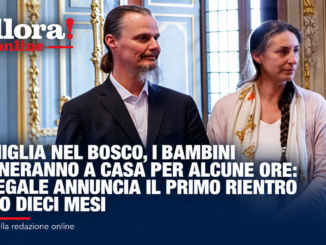
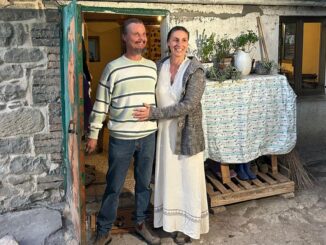
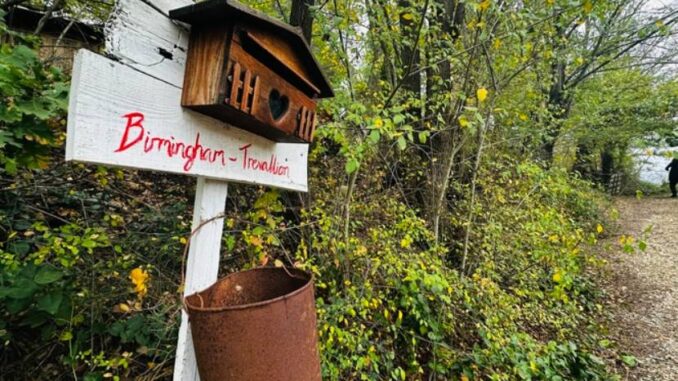
At the centre of the case are Catherine Birmingham and Nathan Trevallion, an Anglo-Australian couple living near Palmoli, a small town in central Italy. Their three children were removed from the family in November 2024 and placed into state care following intervention by social services. Since then, the case has become a national talking point, dividing public opinion between those who see the couple as responsible alternative parents and those who fear a form of social isolation incompatible with modern society.
Now the parents have responded with a detailed seven-page letter submitted to judges at the Juvenile Court of L’Aquila, defending not only their parenting style but an entire philosophy of life based on family unity, homeschooling, nature and emotional development.
Their argument is simple but powerful: they insist they have acted entirely within Italian law and in what they believe to be the best interests of their children.
The couple states that homeschooling was chosen consciously and legally, emphasising that Italian law recognises “istruzione parentale” as a legitimate educational pathway. They explain that Italy itself was selected as the country in which to raise their children partly because of this legal recognition.
According to the parents, their eldest daughter successfully passed official annual evaluations supervised by Italian teachers, who reportedly considered her academically competent and highly intelligent for her age.
But this case goes far beyond a discussion about schooling.
At its core lies a cultural and philosophical clash between two visions of childhood.
On one side stands a modern institutional framework that increasingly sees schools, structured socialisation and state oversight as essential safeguards for children’s development. On the other side stands a family claiming the right to educate their children through nature, close family bonds, emotional security and community-based learning outside conventional systems.
Nathan and Catherine argue that their lifestyle protected their children from bullying, cyberbullying, anxiety, depression and what they describe as the growing mental health crisis affecting children globally.
They describe a life centred around practical learning, family interaction and social experiences within trusted community networks. Their children reportedly cooked with friends, helped build structures on the family property, interacted with neighbours and relatives, maintained relationships with family members in England and Australia through video calls and developed social skills organically through everyday life.
For supporters of the family, the case represents a worrying example of institutional overreach — a situation where unconventional parenting risks being treated as suspicious simply because it does not fit standard social norms.
For critics, however, the central issue is whether children can truly develop socially and emotionally without consistent integration into mainstream society and formal educational environments.
The story touches a nerve in Italy, a country where family has traditionally been considered sacred, but where institutions are also increasingly sensitive to child protection issues following years of public debate surrounding abuse, neglect and social vulnerability.
What makes this case particularly complex is that there are no easy villains.
There are no allegations in the public documents of violence or direct physical abuse. Instead, the debate revolves around interpretation: what constitutes a healthy childhood? How much freedom should parents have to raise children outside societal conventions? And at what point should the State intervene?
These are not questions unique to Italy.
Across Europe, Australia and North America, homeschooling and alternative lifestyles are growing, especially after the pandemic reshaped many families’ relationship with education, technology and mental health. Distrust of institutional systems has also increased among sections of society seeking slower, more self-sufficient and nature-oriented ways of living.
Yet the Palmoli case highlights the tension that emerges when alternative lifestyles collide with institutional structures designed around standardisation.
The emotional language used by the parents reflects this deeper conflict. In their statement, they describe their project as one built on “love, stability, creativity, health and community”.
Whether Italian judges will ultimately accept that vision remains uncertain.
But one thing is clear: this case is no longer only about one family in rural Abruzzo. It has become a mirror reflecting broader anxieties about modern society, childhood, freedom, identity and the growing struggle to define who should shape the next generation — families or institutions