
Pauline Hanson attacks government grants for Aboriginal artist, calling the exhibition “anti-Australian”
Australia is once again caught in the middle of a growing cultural and political battle over identity, history, freedom of expression and public funding.
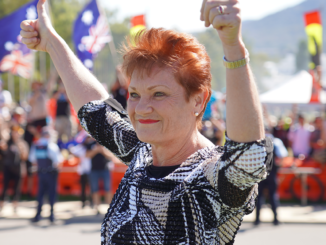
At the centre of the controversy is contemporary Aboriginal artist Kait James, who has been heavily criticised by One Nation leader Pauline Hanson after receiving more than AU$365,000 in government grants for her touring exhibition Red Flags.
The debate exploded after documents obtained by One Nation allegedly revealed two separate grants supporting the exhibition tour:
- AU$48,048 from Creative Australia;
- AU$317,551 from the Department of Infrastructure, Transport, Regional Development, Communications, Sport and the Arts.
Pauline Hanson: “Taxpayer money being wasted”
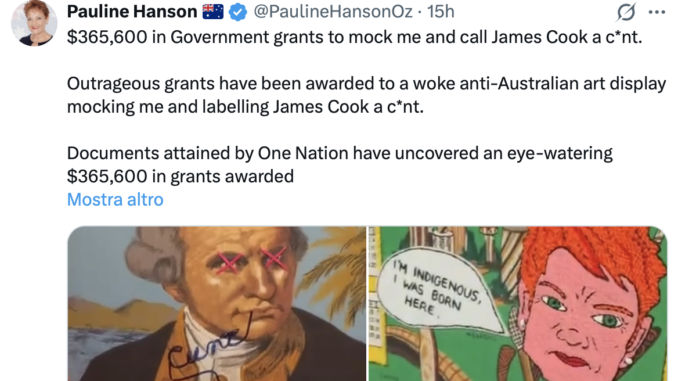
In a strongly worded post published on X, Pauline Hanson accused the federal government of using taxpayer money to support artwork that insults Australia and mocks national historical figures.
Hanson wrote:
“$365,600 in Government grants to mock me and call James Cook a c*nt. Outrageous grants have been awarded to a woke anti-Australian art display.”
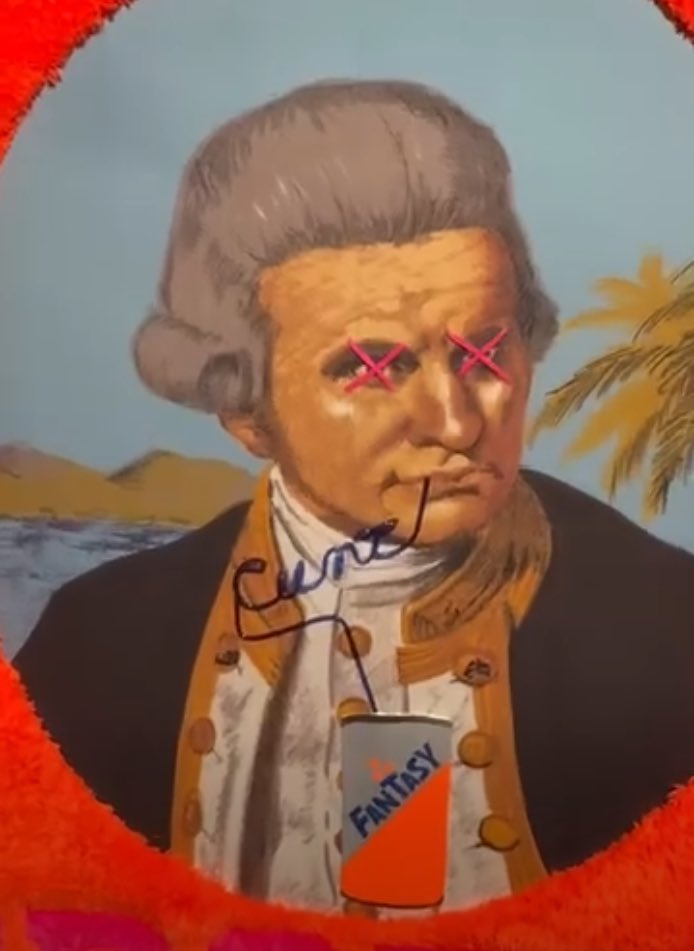
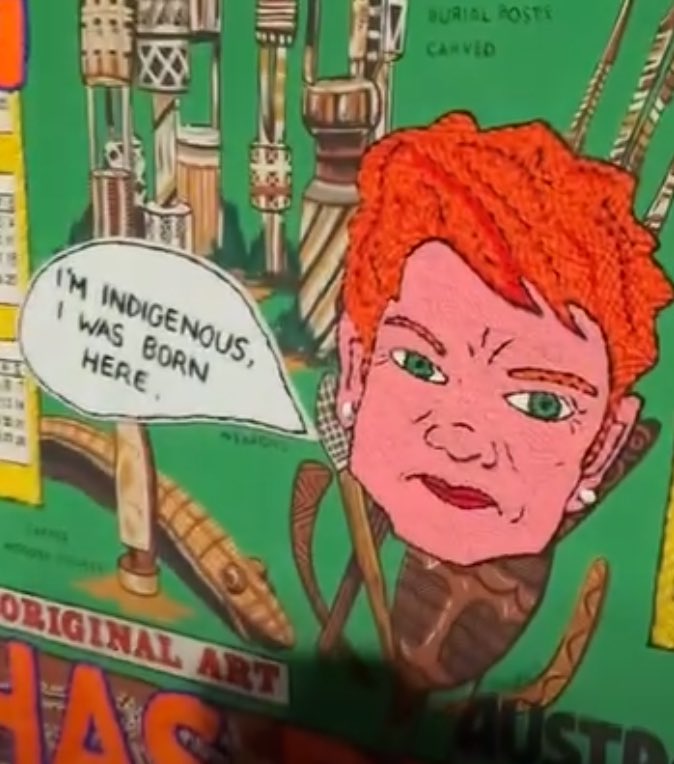
She criticised several artworks featured in the exhibition, including a provocative depiction of Captain James Cook with Xs over his eyes and offensive wording, as well as another artwork mocking Hanson herself.
According to Hanson:
“While Australians are struggling to live this is what Government is wasting your money on. This is divisive, anti-Australian and a waste of taxpayer money.”
Source: Pauline Hanson – X social media platform (@PaulineHansonOz)
More than an art controversy
But the issue goes far beyond a single exhibition.
The Kait James controversy reflects a much deeper debate taking place across modern Australia: who gets to define Australian history, identity and national values?
Kait James, who describes herself as both Aboriginal and Anglo-Australian, uses satire, humour and popular imagery to challenge traditional narratives surrounding colonisation and Australian history.
For supporters, her work represents legitimate artistic freedom and an important Indigenous perspective on Australia’s past.
For critics, however, publicly funding artwork seen as insulting national symbols crosses a line.
Australia’s growing culture wars
The controversy arrives at a time when Australia remains deeply divided over cultural and identity issues.
The failed Voice referendum, debates surrounding colonisation, historical statues, Indigenous recognition and “woke culture” have increasingly polarised political discussion throughout the country.
In this environment, art itself has become political territory.
Every exhibition, public monument and historical interpretation now risks becoming part of a broader ideological conflict between progressive and conservative visions of Australia.
The difficult question taxpayers are asking
At the centre of the debate lies a difficult democratic question:
Should taxpayers fund artistic projects that many citizens may find offensive or divisive?
For defenders of artistic freedom, the answer is yes. Art, they argue, must be allowed to provoke, challenge power and question national myths.
For critics, however, public funding should not be used to support projects perceived as attacking Australia or insulting figures tied to the country’s historical identity.
What is clear is that the Kait James controversy has exposed how unresolved Australia’s relationship with its own history still remains.
And as the country continues debating identity, reconciliation and national memory, these cultural battles are unlikely to disappear anytime soon.
Be the first to comment