
nei Comuni per i cittadini AIRE Da giugno Carta d’identità elettronica nei Comuni italiani anche per i cittadini AIRE.
"Finalmente i cittadini italia ni residenti all’estero potranno richiedere la Carta d’Identità Elettronica (CIE) anche presso i Comuni italiani a partire dal 1 giugno 2026. Con l’approvazio ne definitiva anche da parte del Senato del provvedimento sui servizi ai cittadini AIRE, diventa finalmente realtà una norma che aspettavamo da anni".
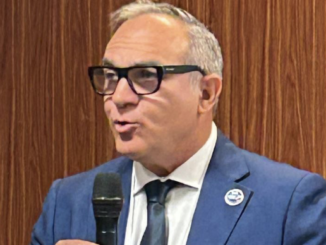
Lo dichiara la deputata di Azione Federica Onori, segretaria della Commissione Affari Esteri della Camera.
"Questo aggiornamento con sentirà ai cittadini AIRE di ri chiedere la CIE anche quando rientrano temporaneamente in Italia, ad esempio per le vacanze, alleviando le criticità legate ai lunghi tempi di attesa nei con solati. Una misura decisiva, spe cialmente in vista dell’imminen te scadenza del 3 agosto 2026, a partire dalla quale sarà obbliga torio, secondo le norme UE, avere un documento biometrico. È il ri sultato di un lavoro politico por tato avanti da anni e culminato nell’accoglimento di una propo sta di Azione, nata dall’ascolto costante delle esigenze delle co munità italiane all’estero", con clude Onori.
By Marco Testa
Leichhardt was once a place you could hear before you saw.
Italian voices spilled onto the pavement from cafés, theatres and clubs. The rhythm of a language, the ritual of a coffee, the arguments about football and politics, all of it formed a living, breathing culture that could not be reduced to a sym bol on a wall.
Today, what remains feels more like an echo.
We are now told by the In ner West Council, that a mu ral will honour Leichhardt’s Italian heritage. We are invited to consultations until the end of this month. Good! Because the consultation announced with fanfare on the future of the Forum’s Cultural Centre never saw the light of day. We are asked to provide feedback, encouraged to believe that this time, perhaps, the community will be heard. And yet the story of the past decade is not one of renewal, but of quiet endings.
The Italian Cultural Centre is no longer in the hands of the community to whom it was donated by the NSW Govern ment, a space where language, memory and performance were meant to keep Italian culture alive, not just in a frame or on few occasions to give spectacle to particular organisations.
The Italian library on Norton Street has disappeared, shelves that held not only books, but the intellectual and emotional link between generations, be tween those who arrived and those who were born here.
The Casa d’Italia, the gath ering place of our community, our living room, where young couples danced, new-found lovers kissed for the first time and our identity was forged is now gone. A home where ideas for our people were planned, campaigns launched, farewells held and belonging was tan gible now displays the promo window of a childcare centre operated by tycoons.
The sporting club, along Gio vinazzo Grove harbour shore, has faded. A place where cul ture ran alongside competition and weekends were as much about community as they were about the score, the food, the company and the fun.
"Italians are now fully inte grated into Australian society", says the recalcitrant cavaliere.
Yet, you notice other ethnic communities having their churches, their halls, their languages and their identity loved, cherished and proudly acknowledged.
As for Leichhardt, these were not nostalgic ornaments. They were institutions. They were the infrastructure of culture.
What stands in their place now is a mural, well-inten tioned, thoughtful, and un doubtedly beautiful. But it sits beside a Chemist Warehouse, a backdrop to a retail strip that speaks more of turnover than of tradition. There is a bitter irony in honouring a “living heritage” in a place that feels increasingly like a cultural sickbay: a space treating the symptoms of loss rather than addressing the cause.
We are asked to admire the past while watching the pres ent disappear. It is no more.
Consultations come and go. Promises are made. Words like “celebration,”
“engage ment,” and “recognition” fill documents and press releas es. But recognition without protection becomes memori alisation. Celebration without support becomes performance.
The community is thanked, photographed for a Street Fes ta, and then, quietly, priced out, planned around, or forgotten.
This is not about resisting change. Cities evolve. Neigh bourhoods transform.
But there is a difference between evolution and erasure.
A mural can tell a story. It cannot keep a language alive in a classroom. It cannot keep a club’s doors open. It cannot host a meeting, a rehearsal, a match, or a debate. It cannot replace the everyday spaces where culture was once active ly practised rather than merely remembered.
What we are left with, then, is a melancholy tribute to a presence that has already been allowed to fade. A paint ed memory of a community that once filled streets, halls and hearts, now reduced to an image for passers-by who may never know what stood there before.
Leichhardt does not need another symbol of what it used to be. It needs a reason for what remains to stay. Because honouring a past of which very little is left is not preservation.
It is a farewell, dressed up as a celebration.

Be the first to comment