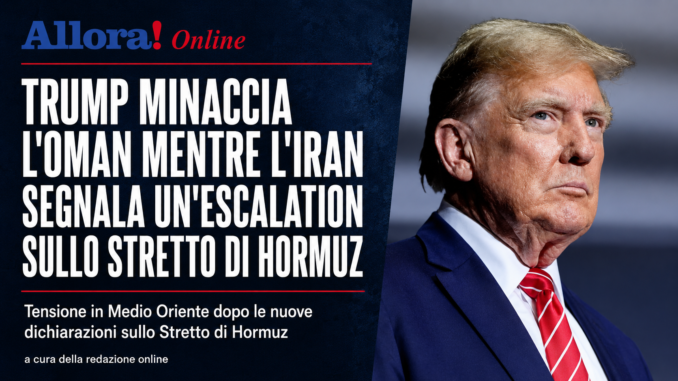
Tensions are rising again in the Middle East. Donald Trump has threatened Oman if it obstructs US efforts over the Strait of Hormuz, while Tehran says it is ready for further military escalation if diplomacy with Washington fails. A 60-day framework between the United States and Iran has now expired without a final agreement.
The confrontation between the United States and Iran is entering a new and potentially dangerous phase, with the Strait of Hormuz emerging as the central point of diplomatic and military tension.
US President Donald Trump has issued a blunt threat against Oman over its role in talks with Iran on the future management of shipping through the strategic waterway.
Oman lies on the southern side of the Strait of Hormuz, while Iran controls much of its northern coastline.
Hormuz at the centre of the crisis
The Strait of Hormuz is one of the world’s most important energy corridors, with a significant share of global oil shipments normally passing through the narrow waterway.
Iranian and Omani officials have been discussing arrangements for maritime navigation, but control of the strait has become one of the main obstacles in negotiations between Washington and Tehran.
Trump has also floated the idea that the United States could eventually claim control over the strategic passage.
Iran warns of military response
Tehran has responded with increasingly strong language.
An Iranian official warned that the country could escalate tensions in the Strait of Hormuz and across the wider region if diplomatic efforts fail.
Iran has also indicated it could take military action to challenge the US naval blockade, describing any future response as “timely and precise”.
For now, Tehran says diplomacy remains possible, but only if Washington meets the commitments Iran believes were contained in the earlier agreement.
60-day agreement expires
The renewed tensions come as the 60-day memorandum of understanding between Iran and the United States reaches its deadline without a broader peace settlement.
The agreement, signed on June 17, was intended to create time for negotiations on ending the conflict and addressing wider issues, including the future of Iran’s nuclear program.
It initially called for an end to military operations, but quickly began to unravel over disagreements about control of Hormuz.
Iran argued that the agreement recognised its right to manage the waterway, while Washington rejected that interpretation.
Hostilities later resumed.
Trump keeps focus on Iran’s nuclear program
The US president has continued to insist that preventing Iran from acquiring a nuclear weapon remains his administration’s main objective.
Trump has also warned Americans that high fuel prices could continue while the conflict remains unresolved.
Energy markets are closely watching developments in Hormuz because any further disruption to tanker traffic could have consequences far beyond the Middle East.
Higher oil prices could feed into transport costs, inflation and broader cost-of-living pressures around the world.
Oman caught between Washington and Tehran
Oman’s position is particularly sensitive.
For years, Muscat has played an important role as a diplomatic intermediary between Iran and Western governments.
Its talks with Tehran are aimed at finding a workable system for maritime navigation and reducing the risk of further disruption to commercial shipping.
Trump’s threat against a long-standing regional partner highlights how serious the dispute over Hormuz has become.
Diplomacy and military threats are now moving side by side.
With the 60-day framework expired and Iran openly warning of escalation, the Strait of Hormuz once again risks becoming the point where a regional conflict could trigger global economic and security consequences.