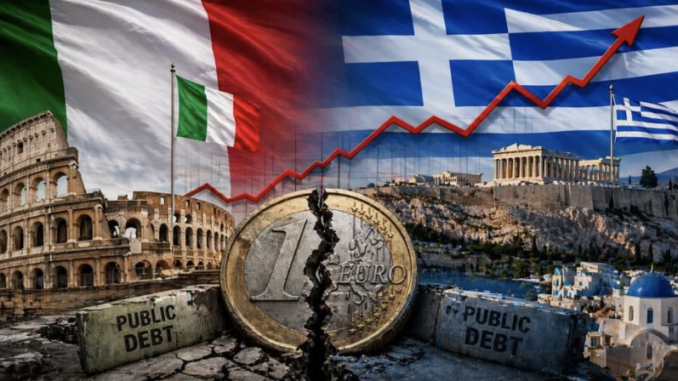
A recent fiscal outlook shows that Greece is set to lose its position as the most indebted country in the eurozone, with Italy expected to overtake it by the end of this year.
Greece’s public debt is projected to fall to around 137% of GDP in 2026, down sharply from previous peaks exceeding 200% during the pandemic period. The decline reflects sustained economic growth, primary budget surpluses, and early repayments of bailout loans.
Italy meanwhile is expected to see its debt rise to a peak of 138.6% of GDP in 2026, slightly above Greece’s level.
The Italian debt trajectory remains relatively stable in coming years, with only gradual reductions projected after 2027 under current fiscal plans. The shift marks a symbolic reversal in eurozone debt rankings, as Greece has spent more than a decade as the bloc’s most heavily indebted economy. However, analysts note that its debt burden has improved significantly since the financial crisis, while Italy continues to struggle with weak growth and structural constraints.
The European Commission is expected to review updated fiscal plans later this month, which will confirm whether the convergence in debt ratios becomes a lasting trend across the region.
Economists say growth and fiscal discipline will determine future eurozone debt rankings going forward closely