
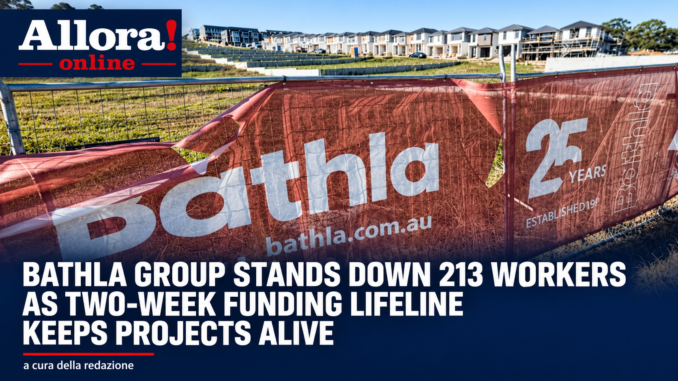
Bathla Group has secured a temporary funding extension from five lenders, allowing parts of the embattled property developer to continue operating for another two weeks. The short-term deal will keep selected construction projects moving, but around 213 employees have been stood down as administrators continue trying to secure enough funding to stabilise the wider business.
The crisis at Bathla Group, one of Sydney’s largest residential property developers, has entered another critical phase.
Administrators from Teneo have secured between $3 million and $5 million in short-term funding from five lenders, giving the group enough support to continue operating for approximately another fortnight.
However, the funding applies only to projects connected to participating lenders. Construction on other sites has been suspended.
213 employees stood down
Bathla employs around 350 people, many of them on working visas.
At an all-staff meeting, approximately 213 employees were told they would be stood down as a direct consequence of the reduced level of construction activity.
The decision does not necessarily amount to permanent termination, but it reflects the group’s inability to keep funding its full workforce under current conditions.
Preliminary figures also show Bathla owes employees around $4 million in wages and superannuation.
Administrators say more funding is needed
Administrator Stephen Longley said the new arrangement would provide the central support needed to keep work going on projects associated with the lenders taking part in the funding package.
But he warned that significant further work was required.
Administrators still need to secure additional commitments if Bathla is to continue operating beyond the next two weeks and complete all projects currently under construction.
Supporting construction is estimated to cost the business around $1 million to $1.3 million per week, depending on how many projects remain active.
Pemulwuy project will continue
One development understood to be continuing is a 312-apartment project in Pemulwuy, in western Sydney.
Lender PAG has reportedly committed to paying contractors directly, allowing work on that site to continue despite Bathla’s administration.
The arrangement could become a model for other projects, with individual lenders choosing to preserve developments they have financed rather than injecting unrestricted cash into the wider Bathla Group.
About $3.4 billion in debt
Bathla entered administration at the end of August after being unable to service approximately $3.4 billion in debt.
Preliminary figures show around $3.08 billion is owed to secured lenders, with a further $145 million owed to the Australian Taxation Office, $42 million in land tax and approximately $130 million to unsecured creditors.
The group had already required emergency funding to meet payroll obligations after it emerged that some employees had gone unpaid for up to eight weeks.
$4.9 billion in property assets, but not cash
Administrators have placed a preliminary value of about $4.9 billion on Bathla’s 219 sites.
That figure does not mean the company has $4.9 billion available to pay creditors.
Most of that value is tied up in land and developments, and many properties are financed by individual lenders.
If assets are sold, proceeds may therefore have to go directly to the lender associated with that specific development rather than being used across the Bathla business.
Around $400 million worth of property is currently for sale or under contract, but administrators do not expect those transactions to provide meaningful short-term cash.
Thousands of homes remain at risk
The scale of Bathla’s crisis extends well beyond its direct workforce.
The group has around 2,000 homes under construction and another 13,000 in its development pipeline, while the administration potentially places the future of around 200 projects across New South Wales in doubt.
Administrators had previously sought a $20 million lifeline from the NSW government, but the request was rejected.
That means the next stage of the rescue effort remains heavily dependent on private lenders and their willingness to continue funding individual developments.
The next two weeks will be crucial in determining which Bathla projects can continue, how many workers may be able to return, and whether enough funding can be secured to avoid further shutdowns across the group.