Australian politics continues to shift further to the right.
And the decision by two prominent Liberal Party figures to join One Nation may represent far more than just personal political defections.
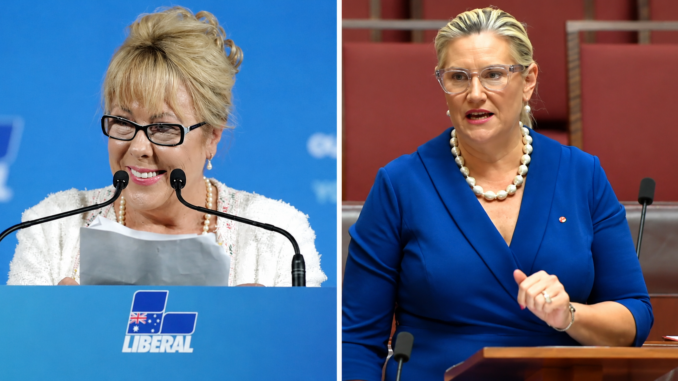
Former New South Wales senator Hollie Hughes and former Liberal vice-president Teena McQueen have officially left the Liberal Party to align themselves with the party led by Pauline Hanson.
The move comes at a particularly fragile moment for Australia’s Liberal Party, which is still grappling with internal divisions, identity struggles, and declining support among parts of its traditional conservative base.
Publicly, Liberal leader Angus Taylor attempted to downplay the significance of the defections.
“It’s their choice,” Taylor said in an interview with Sky News, adding that freedom of choice remains “a strong Liberal value.”
But beneath the calm political language lies a much deeper issue.
Because these departures are not happening in isolation.
Hollie Hughes had already become increasingly critical of the party leadership after being removed from a winnable Senate position ahead of the 2025 election. Over recent months, she openly attacked the direction of the Liberal Party and questioned its leadership strategy.
Teena McQueen, meanwhile, has long been associated with the party’s conservative wing and frequently criticised the Liberal moderates, accusing them of drifting away from the party’s traditional base and values.
Their move to One Nation highlights a growing reality within Australian politics: the fragmentation of the conservative vote.
On one side stands a Liberal Party attempting to maintain a more centrist and institutional image in order to regain support in urban and moderate electorates. On the other side are populist movements like One Nation, which continue to build support through messages centred on national identity, immigration, cost-of-living frustration, security, and anti-establishment sentiment.
Caught in the middle is a conservative electorate that increasingly feels politically homeless.
It is no coincidence that Pauline Hanson continues to maintain political relevance after decades of controversy. One Nation taps into a section of Australia that believes the major parties have become disconnected from everyday concerns, particularly in regional and outer suburban communities.
And the fact that two long-time Liberal figures have now crossed that political line sends a message that cannot easily be ignored.
Numerically, these defections may not immediately change parliamentary power balances. But politically, the symbolism is significant.
Australia’s conservative movement is undergoing an identity battle.
Should the Liberal Party remain a traditionally moderate centre-right force in the mould of classic liberal conservatism? Or should it move toward a more populist, nationalist and anti-establishment direction — following political trends increasingly visible across Europe and parts of the United States?
That question extends far beyond the Liberal Party itself.
It speaks to the future direction of Australian politics.
Because when senior political figures abandon a major mainstream party for a populist alternative, it is rarely just about personalities. More often, it signals a deeper transformation already taking place beneath the surface.
And perhaps the real challenge for the Liberals is not losing two high-profile names.
It is understanding why an increasing number of conservatives feel they need to look elsewhere for a political home.