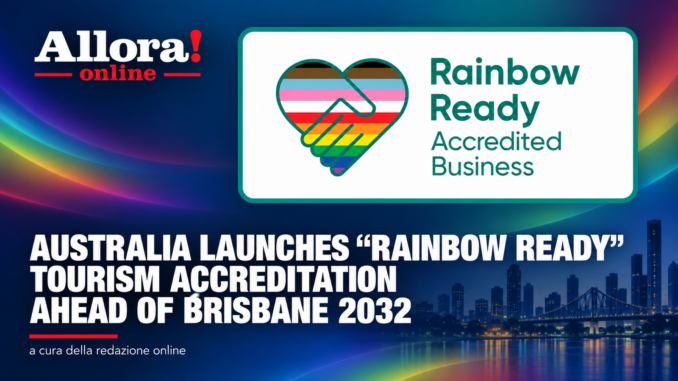
The Australian Tourism Industry Council has backed the launch of “Rainbow Ready”, a new voluntary national accreditation scheme designed to help LGBTQIA+ travellers identify tourism businesses that promote inclusive and welcoming environments. Developed with input from researchers at the University of Queensland and other Australian universities, the program is also being positioned as part of the tourism industry’s preparations for the Brisbane 2032 Olympic and Paralympic Games.
Australia’s tourism industry is moving to strengthen its image as an inclusive destination ahead of major international events.
The Australian Tourism Industry Council (ATIC) has supported the new “Rainbow Ready” accreditation program, aimed at accommodation providers, attractions, venues, events and other tourism businesses that want to demonstrate a clear commitment to welcoming LGBTQIA+ visitors.
The initiative was developed with input from the University of Queensland, along with researchers from Charles Sturt University and Monash University.
A visible sign for accredited businesses
Businesses that complete the voluntary accreditation process will be able to display a heart-shaped rainbow logo at their premises and in promotional materials.
According to Dr Faith Ong from the UQ Business School, the scheme is intended to help LGBTQIA+ travellers more easily identify businesses and destinations where they can expect an inclusive environment.
Dr Ong said research conducted as part of the project found that many LGBTQIA+ travellers still research businesses before travelling because of concerns about safety and how they may be treated in unfamiliar places.
Staff training and internal policies
The accreditation is not expected to require major operational changes for most tourism businesses.
Instead, the program focuses largely on staff training, internal policies and customer service practices.
One example raised by researchers concerns hotel staff assuming that a same-sex couple are simply friends and automatically offering separate beds.
Training could also prepare staff to respond appropriately if customers are subjected to derogatory comments or abuse.
The scheme is voluntary
The accreditation process will be overseen by the Australian Tourism Industry Council.
It does not create new legal obligations for participating businesses. Australian anti-discrimination laws already regulate unlawful discrimination.
Supporters of the program argue that the value of accreditation lies in giving businesses a clear way to communicate their standards and values to customers.
The research behind the initiative included interviews with both LGBTQIA+ travellers and tourism operators.
Potential commercial benefits
Dr Ong said the accreditation could also offer commercial advantages.
Businesses that participate may gain access to new marketing opportunities, improve their reputation and strengthen their credibility among travellers looking for inclusive services.
The program is therefore being presented as both a customer-service initiative and a potential business development tool.
Brisbane 2032 in focus
ATIC chief executive Erin McLeod said the years leading up to the Brisbane 2032 Olympic and Paralympic Gamesprovide an important opportunity for tourism businesses to prepare for an influx of international visitors.
She said visible signs of support can help reassure LGBTQIA+ travellers who may exercise greater caution when visiting unfamiliar destinations.
The broader message, she said, is to show that Australia’s tourism industry is welcoming to visitors from around the world.
Tourism and international reputation
Brisbane 2032 will involve far more than sporting infrastructure and transport.
It will also place Australia’s hospitality and tourism industries under international scrutiny.
Hotels, restaurants, attractions and events will be expected to accommodate visitors from a wide range of cultures, identities and backgrounds.
“Rainbow Ready” is intended to form part of that preparation by allowing businesses to signal their approach to inclusion before visitors arrive.
The next test will be how widely tourism operators adopt the program and whether the accreditation becomes a recognisable national standard before Brisbane 2032.