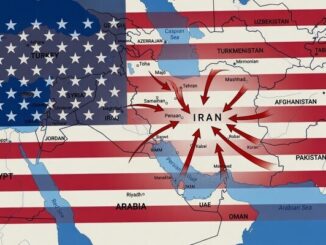
The fragile calm that followed April’s ceasefire between Iran, Israel and the United States may already be collapsing.
According to reports from major American media outlets, including the The New York Times and CNN, Washington and Jerusalem are actively considering a new wave of military operations against Iran as early as next week, amid growing frustration over stalled diplomacy, regional proxy attacks and escalating cyber threats.
Officials familiar with the discussions reportedly say the military options under review go beyond the targeted retaliatory strikes seen in recent months. Plans could include broader attacks against Iranian military assets, energy infrastructure and strategic facilities linked to Tehran’s nuclear programme.
Among the most dramatic scenarios being discussed, according to the reports, is a high-risk special forces operation aimed at physically securing highly enriched uranium believed to be stored inside underground facilities near Isfahan — a mission that would mark one of the most dangerous covert operations attempted in the region in decades.
The reports suggest that Israeli operational plans had already been prepared before the ceasefire negotiated in early April temporarily halted military escalation. Those plans were suspended but never abandoned.
Now, with repeated attacks by Iran-backed groups against American personnel and allied interests across the region, pressure appears to be mounting inside both the Israeli government and parts of the U.S. national security establishment to reassert deterrence through force.
Yet the White House faces a difficult balancing act.
President Donald Trump is reportedly increasingly impatient with Iran’s refusal to make additional concessions during indirect negotiations. At the same time, sources cited by CNN indicate that Trump remains wary of being pulled into a prolonged regional war that could destabilise global energy markets and drag the United States into another Middle Eastern conflict at a politically delicate moment.
Much of that concern centres on the Strait of Hormuz, the strategic maritime corridor through which roughly a fifth of the world’s oil supply passes each day.
Any major escalation involving Iran raises immediate fears of disruption to shipping routes, spikes in oil prices and wider economic instability. Analysts note that even limited military actions in the Gulf region have historically triggered volatility across global financial markets.
Complicating the situation further are emerging allegations of Iranian-linked cyber activity targeting American fuel infrastructure.
CNN reported that U.S. authorities are investigating a series of cyber intrusions involving automated fuel tank monitoring systems at petrol stations across several American states. While the attacks reportedly caused no physical damage or fuel shortages, officials fear the incidents expose significant vulnerabilities within critical infrastructure networks.
According to investigators, the hackers allegedly exploited internet-connected systems lacking basic password protections. Although fuel levels themselves were not altered, experts warn that gaining control over such systems could theoretically interfere with leak detection mechanisms or broader supply-chain operations.
If Iranian involvement is confirmed, it would represent another front in an increasingly hybrid conflict — one fought not only with missiles and drones, but also through cyber warfare, economic pressure and proxy militias.
Meanwhile, violence continues across the wider region.
Israeli strikes in southern Lebanon reportedly killed at least six people, including three paramedics, according to regional sources. The attacks further underscore how interconnected the various fronts of the Middle Eastern crisis have become, with tensions involving Iran, Hezbollah, Israel and U.S. forces increasingly overlapping.
The current moment feels less like a temporary pause and more like an intermission before a potentially larger confrontation.
Diplomacy has not collapsed entirely, but confidence in negotiations appears to be fading rapidly on all sides. Military planners are once again moving closer to the centre of decision-making, while energy markets, intelligence agencies and global allies prepare for the possibility that the region could soon enter a new and more dangerous phase.
For now, the question is no longer whether tensions between Iran, Israel and the United States remain high.
The question is whether the next strike has already been decided.