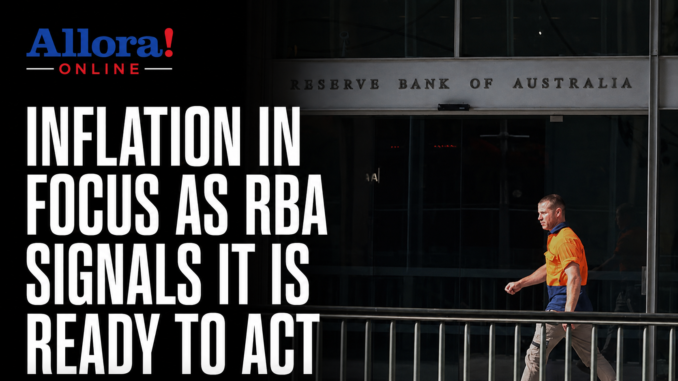
Australia’s latest CPI figures will be released at 11:30am AEST, with mortgage holders watching closely for signs that interest rates could remain higher for longer—or rise again
Australia is awaiting the release of fresh inflation figures that could significantly influence the Reserve Bank’s next decision on interest rates.
The Australian Bureau of Statistics will publish the latest monthly Consumer Price Index data today at 11:30am AEST, providing an updated picture of price pressures across the economy.
Ahead of the announcement, Reserve Bank of Australia Governor Michele Bullock warned that the central bank remained “prepared to act” if inflation failed to move sustainably back towards its target.
A stronger-than-expected inflation result would increase the likelihood of interest rates remaining higher for longer and could even revive the possibility of another rate increase. A sharper slowdown, however, would strengthen expectations that the RBA may eventually begin cutting rates.
Inflation remains above target
The RBA’s preferred measure of underlying inflation, the trimmed mean, is currently running at 3.6 per cent, above the central bank’s target range of 2 to 3 per cent.
Headline annual inflation reached 4.0 per cent in the 12 months to May 2026, easing slightly from 4.2 per cent in April.
Housing remains the largest contributor to inflation, rising 6.5 per cent over the year. Food and non-alcoholic beverages increased by 3.3 per cent, while transport costs also rose by 3.3 per cent.
These pressures continue to weigh heavily on household budgets, particularly for mortgage holders already dealing with elevated borrowing costs.
Productivity the “fundamental challenge”
Speaking at the Anika Foundation Fundraising Lunch, Ms Bullock described Australia’s weak productivity growth as the country’s “fundamental challenge”.
She warned that the economy is currently struggling to expand without creating additional inflationary pressure because productivity growth has remained persistently weak.
Poor productivity limits the amount the economy can produce without pushing up wages and prices. It also affects real incomes and living standards, making it more difficult for households to recover from the recent cost-of-living crisis.
Ms Bullock said Australia had become more vulnerable to global economic shocks, with weak productivity contributing to pressure on real wages and household incomes.
Real wages and living standards under pressure
The Governor’s remarks follow an OECD report indicating that real wages in Australia have fallen by around 5 per cent over the past five years.
Other research has suggested that growth in Australian living standards is at its weakest level since the First World War.
The Albanese Government has included a series of productivity measures in the federal budget, aimed at reducing regulatory costs for businesses by an estimated $10.2 billion annually.
The government argues that improving efficiency, reducing unnecessary regulation and encouraging investment will help strengthen economic growth without adding further inflationary pressure.
Mortgage holders face another anxious wait
Today’s CPI release will be closely examined by economists, financial markets and borrowers.
A result above expectations would place additional pressure on the RBA to maintain a restrictive monetary policy and could force the central bank to consider another increase in the cash rate.
Such a move would raise repayments for households with variable-rate mortgages and increase borrowing costs for businesses and consumers.
A lower inflation result would provide some relief, but the RBA is likely to require sustained evidence that price growth is returning to target before reducing rates.
For millions of Australians, today’s figures will therefore be more than an economic statistic. They could determine whether mortgage repayments remain elevated, whether another rate rise returns to the agenda and how long the cost-of-living squeeze continues.