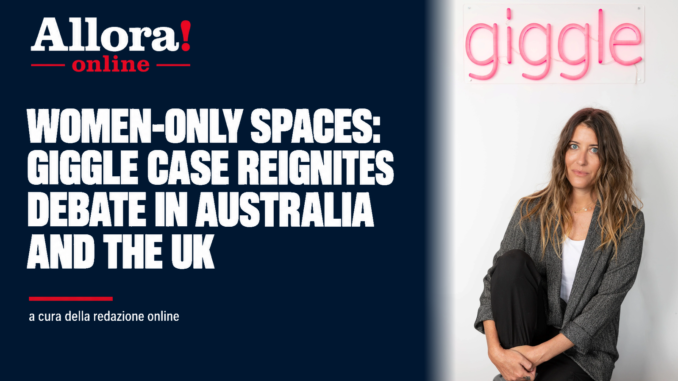
Comments by Labour MP Samantha Niblett on changing rooms have fuelled an already heated debate. In Australia, the High Court has closed the final legal avenue available to Giggle for Girls founder Sall Grover.
By the online editorial team
The right of women to have single-sex spaces and the protection of transgender people are once again at the centre of political debate in Australia and the United Kingdom.
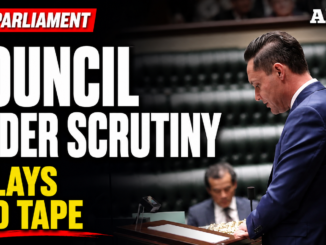
The latest controversy followed comments by British Labour MP Samantha Niblett during a BBC discussion about access to women’s changing rooms.
Niblett suggested that a woman who felt uncomfortable sharing a changing room with a transgender person could use a more private area. Her response drew strong criticism from those who argue that women should not be expected to remove themselves from spaces originally created for their privacy.
Critics say asking a woman to find a separate area transfers responsibility for resolving the conflict onto her. Supporters of transgender inclusion argue that facilities should provide practical arrangements that respect the dignity of transgender people while also protecting the privacy of other users.
The debate extends beyond toilets and changing rooms. Similar questions arise in prisons, domestic violence shelters, healthcare facilities and sport, where privacy, safety, gender identity and protection from discrimination can come into conflict.
The Giggle v Tickle case
In Australia, the debate has intensified following the conclusion of the legal proceedings involving Sall Grover, founder of the Giggle for Girls app, and Roxanne Tickle, a transgender woman who was removed from the platform.
Giggle was created as a digital space for women. Tickle was initially granted access to the app but was later excluded.
The Federal Court found that her removal amounted to discrimination prohibited under the Sex Discrimination Act. On appeal, the Full Federal Court ruled that Tickle had been directly discriminated against and increased her compensation to $20,000.
Grover argued that Giggle constituted a “special measure” intended to advance equality for women and that the exclusion should therefore have been lawful.
The Full Federal Court rejected that argument, finding that measures intended to support one group could not justify discrimination based on gender identity against another person protected by the same legislation.
The High Court has now refused Grover special leave to appeal and ordered costs against her. The court did not conduct a new hearing on the merits of the case. Its decision leaves the Full Federal Court ruling in place after finding no sufficient reason to reconsider its interpretation of the legislation.
Documents from the proceedings are available through the Federal Court’s official case file.
Grover considers leaving Australia
Grover reacted strongly to the decision and said she was considering leaving Australia.
The Giggle founder believes Australian law no longer guarantees women the ability to create spaces exclusively based on biological sex. Supporters of the judgment maintain that transgender women are protected under anti-discrimination legislation and cannot be excluded because of their gender identity.
The case has become a national political issue because the Sex Discrimination Act does not contain a definition of “sex” expressly limited to a person’s sex recorded at birth.
Angus Taylor promises legislative changes
Opposition Leader Angus Taylor has promised that a future Coalition government would amend the Sex Discrimination Act.
The proposal would introduce a definition of sex based on biological sex and provide stronger legal protection for single-sex spaces for women and men.
Taylor has argued that the change would provide legal certainty without targeting transgender Australians.
“We will define biological sex in the Act. Male or female. The sex you are born,” Taylor said when announcing what he described as a first-term priority for a Coalition government. The proposal was outlined publicly by the opposition leader.
The Albanese government has not announced an equivalent review of the federal legislation.
Different legal approaches
Australia and the United Kingdom are currently following different legal approaches.
In Britain, the Supreme Court ruled in 2025 that the terms “man”, “woman” and “sex” in the Equality Act refer to biological sex. The judgment did not remove legal protections for transgender people, who remain protected from discrimination through the characteristic of gender reassignment.
In Australia, gender identity is expressly protected under the Sex Discrimination Act. The judgment in Giggle v Tickleconfirmed that this protection applies when a service is presented as being exclusively for women.
The political question remains unresolved: when should a space separated on the basis of sex be legally permitted, and how should the law protect both women’s privacy and safety and the right of transgender people not to experience discrimination?
Following the High Court’s refusal of special leave, any significant change to the existing legal balance will have to come from the Australian Parliament.