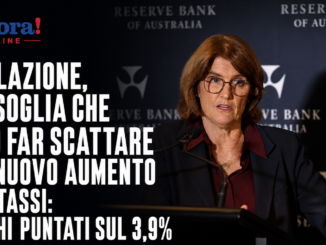
The Reserve Bank keeps interest rates unchanged but warns another hike remains possible if inflation pressures intensify
The Reserve Bank of Australia has kept the cash rate on hold at 4.35 per cent, bringing some relief to millions of mortgage holders while making clear that further tightening remains possible.
The widely expected decision came as Australian shares pushed higher, with the ASX reaching a record high on Tuesday.
In its statement, the RBA said it remained focused on bringing inflation sustainably back to target and would not rule out raising rates again if new upside risks emerged.
“The Board will continue to do what it considers necessary to bring inflation sustainably back to target, including increasing the cash rate target further if upside risks materialise,” the central bank said.
Markets had expected a hold
Before the announcement, the Australian share market was already trading higher on expectations that the RBA would leave rates unchanged.
By midday, the S&P/ASX 200 had gained 20.3 points, or 0.21 per cent, to 9,252.3, while the broader All Ordinaries was up 0.2 per cent at 9,442.9.
The market was also reacting to renewed geopolitical tension between the United States and Iran, which pushed oil prices sharply higher.
Brent crude climbed towards US$88 a barrel, helping lift Australian energy stocks by around 3.7 per cent.
Woodside, Santos, coal producers and refinery operators were among the major beneficiaries.
Inflation remains the key risk
Higher energy prices remain one of the main threats to the inflation outlook.
Westpac economist Mantas Vanagas said renewed tensions between Washington and Tehran had made investors more nervous about inflationary pressures ahead of key US consumer price data.
That uncertainty helps explain why the RBA is unwilling to declare the rate-hiking cycle finished.
For Australian households, Tuesday’s decision means mortgage repayments will not immediately rise again, but the central bank’s language suggests borrowers should not yet assume rates have peaked permanently.
Gold and miners rally
Mining stocks also continued their recent strength.
Gold reached a two-month high of around US$4,430 an ounce, helping the local gold sub-index gain 2.3 per cent.
BHP and Rio Tinto also advanced as copper and iron ore futures recovered. BHP traded at $64.29, less than $2 below its record high.
Financial stocks were weaker, however, falling around 0.4 per cent as the major banks and insurers slipped.
Healthcare performed more strongly, reaching its highest level since March as investors returned to major names including CSL, Pro Medicus and ResMed.
Consumer staples and real estate were among the weaker sectors.
Company moves weigh on some stocks
There were also several major corporate developments.
NAB announced the retirement of chief operating officer Les Matheson and technology executive Patrick Wright, with their responsibilities to be redistributed among other senior executives.
SGH, controlled by the Stokes family, lost more than 10 per cent of its value after disappointing earnings despite reporting a more than 30 per cent increase in full-year net profit to $689.2 million.
Life360 fell more than 13 per cent after missing earnings expectations, even though second-quarter revenue rose almost 40 per cent to US$159 million.
Australian dollar remains firm
The Australian dollar was trading at around 70.58 US cents, slightly lower than 70.66 US cents late on Monday.
Investors will now focus closely on Governor Michele Bullock’s comments for further guidance on whether the next move in interest rates is more likely to be another increase or an eventual cut.
For now, Australian borrowers have avoided another rise.
But the RBA’s message is clear: the fight against inflation is not yet over.