Australia has lost its final biosecurity distinction. For the first time, the highly pathogenic H5N1 strain of avian influenza has been detected on Australian soil, marking a significant moment in the country’s long battle to keep the virus out.
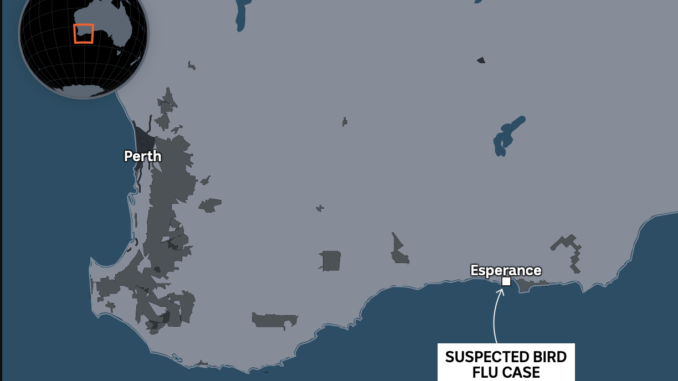
Federal Agriculture Minister Julie Collins confirmed that laboratory testing had identified the deadly H5N1 strain in a brown skua, a migratory seabird found on a remote beach in Cape Le Grand National Park near Esperance, about 700 kilometres south-east of Perth.
The bird was discovered in poor condition earlier this week and died shortly after being isolated. Further testing confirmed the presence of the virus, making Australia the last continent on Earth to officially record an H5N1 infection.
YEARS OF PREPARATION
Australian authorities have spent years preparing for this scenario.
Governments at both federal and state levels have conducted extensive emergency exercises and biosecurity simulations involving agriculture, health, transport, emergency services and wildlife agencies.
Last year alone, the federal government committed $95 million to strengthen biosecurity, environmental protection and public health preparedness. An additional $11.2 million funding package was announced just hours before confirmation of the first H5N1 case.
Officials insist that Australia is well positioned to respond quickly should additional cases emerge.
POULTRY INDUSTRY ON HIGH ALERT
The immediate concern is protecting Australia’s poultry sector.
The industry is still recovering from the country’s largest outbreak of the H7 strain of bird flu, which forced the destruction of more than two million laying hens and led to widespread egg shortages throughout 2024 and 2025.
Western Australia’s Chief Veterinary Officer, Dr Michelle Rodan, said authorities are focusing on preventing the virus from spreading into commercial poultry operations.
Surveillance programs are being expanded along Australia’s coastline while biosecurity teams monitor migratory birds that may have carried the virus into the country.
Authorities are also considering housing orders that would require poultry to be kept indoors, reducing the risk of contact with wild birds.
Such measures could significantly affect Australia’s free-range poultry sector.
THREAT TO AUSTRALIA’S UNIQUE WILDLIFE
The concern extends far beyond farming.
Environmental experts warn that H5N1 could pose a serious threat to Australia’s native wildlife.
Threatened Species Commissioner Dr Fiona Fraser said more than 30 vulnerable species have already been identified as potentially susceptible to the virus.
Over the past several years, governments and conservation agencies have developed more than 100 protection plans covering key environmental sites, including Ramsar wetlands, coastal habitats and critical wildlife reserves.
Among the species considered at risk are several seabirds as well as iconic Australian mammals such as the Tasmanian devil.
ESPERANCE ON ALERT
Wildlife carers in Esperance have already activated emergency protocols.
A second seabird, a giant northern petrel found exhausted and unable to stand, is currently being held in quarantine while tests are conducted.
Local wildlife hospitals and carers have received specialised training over recent years specifically to prepare for the arrival of H5N1.
A NEW CHAPTER IN AUSTRALIA’S BIOSECURITY STORY
The detection of H5N1 marks a historic turning point for Australian biosecurity.
For years, Australia’s geographic isolation and strict quarantine controls had protected the country from a virus that has spread across Europe, Asia, Africa, North and South America.
That protection has now been breached.
Authorities are urging calm, stressing that the virus has so far been detected in only a single wild bird and that there is currently no evidence of spread to commercial poultry.
However, the discovery confirms that Australia has now joined the global map of H5N1 infections.
The challenge ahead will be to prevent the virus from reaching poultry farms while protecting some of the world’s most unique wildlife from one of the most feared animal diseases of modern times.