The Victorian premier could face a leadership spill at Tuesday’s caucus meeting amid poor polling, controversy surrounding the government’s Big Build projects and fears of a heavy election defeat in November
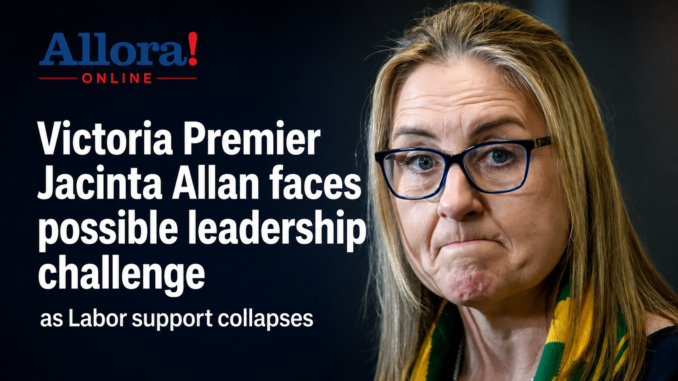
Victorian Premier Jacinta Allan could face a formal leadership challenge as early as Tuesday, when Labor MPs are due to meet for their next caucus meeting.
According to reports, several Labor parliamentarians contacted Allan on Sunday evening to tell her she had lost the support of the majority of the party room.
The premier was reportedly at her home in Bendigo with senior staff when she received the news.
No challenge has yet been officially announced, but party sources claim tensions that have been building since February have now reached a point of no return.
A leadership contest could take place at the caucus meeting scheduled for 10am on Tuesday.
Leadership Discussed at Labor’s National Conference
Allan’s political future was reportedly discussed during Labor’s national conference in Adelaide over the weekend.
Several state and federal figures are believed to have attended private meetings to consider whether the premier should be replaced before the Victorian election, which is expected to be held in late November.
Allan attended the opening day of the conference, but her appearance appears to have done little to calm internal concerns.
Some Labor insiders reportedly compared her unfavourably with other party premiers, including New South Wales Premier Chris Minns and South Australian Premier Peter Malinauskas, who are viewed as more politically effective and better connected with voters.
A growing section of the party believes this week may be the final opportunity to change leaders while still giving a successor enough time to establish a public profile and run a credible campaign.
Polling Has Labor MPs Alarmed
The latest polling has intensified fears within the government.
The Coalition is reportedly leading Labor by 56% to 44% on a two-party-preferred basis.
Even more concerning for the government is the primary vote. Labor is said to be polling at 23%, behind the Coalition on 29% and One Nation on 24%.
For One Nation to move ahead of Labor’s primary vote in a state long regarded as a progressive stronghold would represent a major political warning.
Federal Labor MPs are also reportedly concerned that a severe state election defeat could damage the party’s position in Victorian federal electorates.
Big Build Corruption Allegations Add to the Pressure
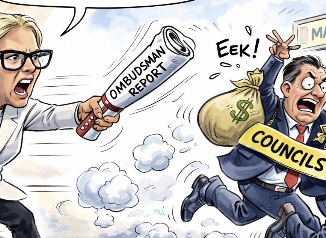
One of the main causes of internal dissatisfaction is Allan’s handling of corruption allegations linked to unions and major government infrastructure projects.
The Victorian government’s Big Build program includes some of the state’s largest and most expensive transport and construction projects.
However, it has become the subject of controversy over alleged links between unions, contractors, improper practices and organised crime.
Critics within Labor argue that Allan has failed to respond with sufficient speed and authority.
The premier is expected to present a proposal to cabinet for a commission into organised crime, but opponents have dismissed the move as a last-minute attempt to reset the government’s agenda and recover support.
The proposal may not be enough to prevent a leadership challenge.
Ben Carroll Could Mount a Challenge
Deputy Premier Ben Carroll is being considered as a possible replacement.
Senior Labor figures are reportedly discussing a plan under which Carroll would announce his candidacy on Monday or early Tuesday, shortly before the caucus meeting.
He could also support a royal commission into corruption allegations involving unions and the Big Build, immediately distinguishing his position from Allan’s approach.
However, there has been no confirmation that Carroll has formally decided to challenge or that an agreement has been reached among the party’s factions.
Three-Quarters of Caucus May Want Allan Gone
Some internal estimates suggest up to three-quarters of Labor’s 69-member caucus could call on Allan to step down.
The figure is unconfirmed, but it reflects the scale of the political pressure now surrounding her leadership.
Some MPs would prefer Allan to resign voluntarily before Tuesday’s meeting, avoiding a damaging public contest.
Others believe a formal spill may be necessary if the premier insists she still holds enough support to continue.
The timing also remains uncertain. One Labor source suggested a public statement could be released on Monday, while another said the challenge may not emerge until Tuesday morning.
Sonya Kilkenny Offers Cautious Support
Victorian Attorney-General Sonya Kilkenny said Allan had her full support and dismissed the speculation as “idle gossip”.
Kilkenny argued that leadership rumours were not helping Victorians and were instead causing harm.
However, she stopped short of guaranteeing that Allan would lead Labor into the November election.
That careful wording has been interpreted as another indication of the premier’s increasingly fragile position.
During leadership crises, political statements are often judged as much by what they leave unsaid as by what they include.
Pressure Has Been Building for Months
Allan became premier following the departure of Daniel Andrews, inheriting a government marked by years in office, major infrastructure spending, rising debt and growing dissatisfaction over public services.
Cost-of-living pressures, crime, strains on the health system and concerns about the financial sustainability of infrastructure projects have gradually weakened Labor’s standing.
The Big Build controversy and the rise of One Nation have added to the pressure, allowing opponents to attract voters frustrated with the major parties.
Labor MPs must now decide whether the government’s problems are primarily caused by Allan’s leadership or whether they are too deeply rooted to be solved by replacing the premier.
A Late Leadership Change Carries Serious Risks
Replacing the premier only months before an election would be a high-risk decision.
A new leader would have limited time to build public recognition, change the government’s political direction and convince voters that Labor had genuinely reset.
The Coalition would inevitably portray any leadership spill as evidence of chaos and instability.
However, many Labor MPs reportedly believe keeping Allan in place could lead to an even heavier defeat.
The party is therefore caught in a familiar political dilemma: changing leaders may look desperate, but refusing to act may be more dangerous.
Tuesday Could Decide Allan’s Future
The coming hours are likely to be critical.
Allan must decide whether to confront the caucus, negotiate with rebel MPs or resign voluntarily to avoid a public leadership contest.
Carroll and any other potential candidates must also determine whether they have the numbers and whether they are prepared to take responsibility for leading Labor into an extremely difficult election.
For Victorian Labor, the crisis is no longer only about Jacinta Allan.
It is about the survival of a government that, after years of political dominance, is now facing the genuine prospect of losing power.