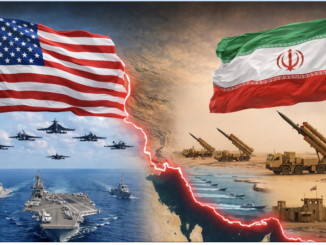
Washington says the agreement has reduced oil prices, reopened the Strait of Hormuz and prevented Iran from obtaining a nuclear weapon, although several key provisions remain under negotiation.
The White House has promoted President Donald Trump’s memorandum of understanding with Iran as a major foreign-policy victory, declaring that the agreement has addressed a threat Washington had spent four decades attempting to contain.
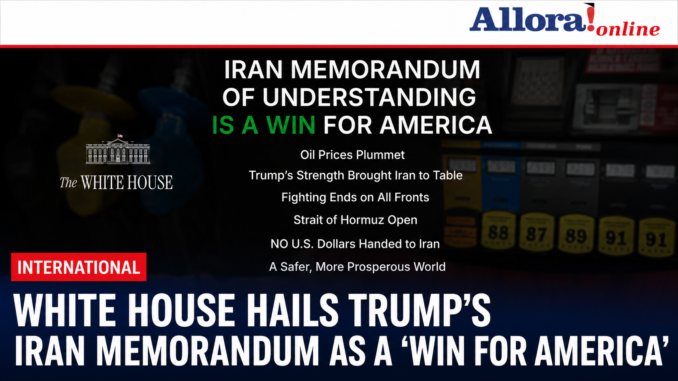
In a social-media post, the administration described the accord as “a win for America”, claiming that it had brought Iran to the negotiating table, contributed to falling oil prices, reopened the Strait of Hormuz, ended fighting across the region and ensured that Tehran would never possess a nuclear weapon.
Trump signed the 14-point memorandum at the Palace of Versailles in France on June 17. The preliminary agreement was designed to end four months of conflict between the United States and Iran, restore commercial navigation through the Strait of Hormuz and establish a framework for further negotiations.
Nuclear commitments at the centre of the agreement
Under the framework described by American and Iranian officials, Tehran has undertaken not to produce or acquire nuclear weapons. Iran is also expected to freeze further uranium enrichment and the expansion of its nuclear facilities while negotiations continue.
A future comprehensive agreement would provide for Iran’s stockpile of highly enriched uranium to be diluted under an agreed monitoring system. However, many of the most sensitive details—including the scope and duration of international inspections—have not yet been finalised.
Trump has said that Iran accepted the “highest level” of nuclear inspections for an indefinite period. Iranian authorities, however, subsequently denied that they had agreed to the return of International Atomic Energy Agency inspectors under those terms. The conflicting statements indicate that the White House’s promise that Iran “will never have a nuclear weapon” remains a political objective rather than the result of a completed nuclear settlement.
Strait of Hormuz and oil markets
The reopening of the Strait of Hormuz is one of the agreement’s most economically significant provisions. The strategic waterway normally carries approximately one-fifth of the world’s oil and liquefied natural gas, making any disruption a serious threat to global energy supplies.
Oil prices declined after the initial ceasefire and the announcement that commercial shipping would resume. Washington also began lifting its blockade of Iranian ports, while temporary sanctions waivers allowed Tehran to resume oil exports.
The White House has insisted that no American taxpayer money was handed directly to Iran. That statement does not mean Tehran received no economic concessions: the agreement includes sanctions relief, renewed oil revenues and the possible release of Iranian assets currently held abroad.
Trump later said that any funds released by the United States would remain in an American-controlled escrow arrangement and would be used for humanitarian purchases, including food and medical supplies. Iranian officials have presented a broader interpretation of the financial provisions, demonstrating that the two sides remain divided over important aspects of the accord.
A fragile ceasefire
The administration’s claim that fighting has ended “on all fronts” has also been challenged by subsequent events. Missile attacks, strikes and counterstrikes in and around the Strait of Hormuz have placed the ceasefire under renewed pressure, with Washington and Tehran accusing each other of violating the agreement.
The latest confrontation followed an Iranian projectile striking a commercial vessel, prompting an American military response. Despite the escalation, both governments agreed to resume discussions, with Trump’s envoys Steve Witkoff and Jared Kushner due to participate in high-level talks in Doha alongside technical delegations.
The memorandum therefore represents a potentially significant diplomatic breakthrough, particularly if it delivers a lasting reopening of the Strait of Hormuz and enforceable restrictions on Iran’s nuclear programme.
Nevertheless, it remains an interim arrangement rather than a definitive peace or nuclear treaty. Its ultimate success will depend on whether the ceasefire holds, whether Iran accepts a verifiable inspection system and whether the two countries can resolve their disagreements over sanctions, frozen assets and regional security.
For Trump and the White House, the agreement is already being presented as proof that military and economic pressure forced Tehran to negotiate. For the international community, however, the decisive test will not be the administration’s political message, but whether the promises contained in the memorandum are fully implemented.