The former top US infectious disease official accuses Republican Senator Rand Paul of pursuing an “obsessive vendetta” to send him to prison. Paul is preparing a contempt vote and disputes the protection offered by Joe Biden’s pre-emptive pardon
A bitter confrontation erupted in the United States Senate between Anthony Fauci and Republican Senator Rand Paulduring a hearing focused on the handling of the COVID-19 pandemic and the unresolved origins of the virus.
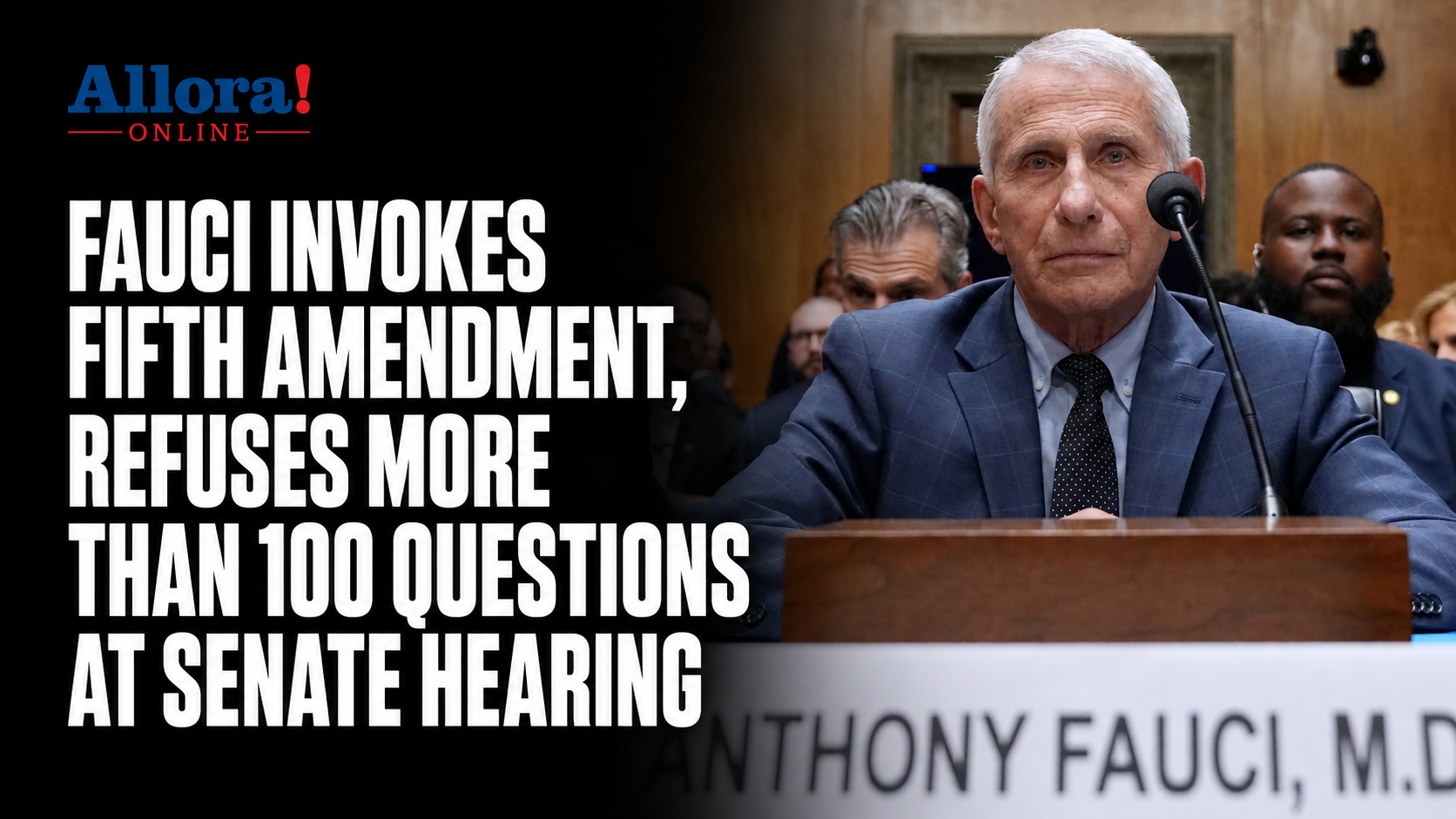
Fauci, who led the National Institute of Allergy and Infectious Diseases for almost four decades and became the public face of the US pandemic response, refused to answer more than 100 questions by invoking the Fifth Amendment, which protects individuals from being compelled to make potentially self-incriminating statements.
Now 85 and retired since 2022, Fauci accused Paul of organising the hearing as part of a personal and political campaign aimed at securing his prosecution.
Paul, the Kentucky senator who chairs the Senate Homeland Security and Governmental Affairs Committee, responded by arguing that Fauci was not entitled to remain silent before the committee. He announced that a vote to hold him in contempt of Congress would be scheduled for the following week.
Invoking the Fifth Is Not an Admission of Guilt
From a legal standpoint, invoking the Fifth Amendment does not amount to an admission of wrongdoing.
Fauci and his legal team argue that any new statement could expose him to a prosecution for false statements or misleading Congress if federal authorities later claimed that one of his answers was inaccurate.
US law makes it a criminal offence to knowingly and deliberately provide Congress with materially false, fictitious or fraudulent information.
Fauci therefore adopted an exceptionally cautious strategy, refusing to answer even apparently harmless questions, including what day it was and the colour of his tie or the carpet in the hearing room.
The approach was clear: answer nothing, so that no statement—however minor—could later be used against him.
Rand Paul Warns of Consequences
Paul maintains that Congress can compel Fauci to testify by granting him immunity for the statements he provides.
The senator cited an 1896 US Supreme Court ruling allowing Congress to require testimony without violating the Fifth Amendment when a witness is protected from criminal prosecution based on those answers.
Paul also argued that the pre-emptive pardon issued by former president Joe Biden would not protect Fauci from offences allegedly committed after the pardon, including any false statement made during the Senate hearing.
The committee is expected to consider a contempt resolution. Approval would open another political and legal battle, although it would not automatically result in a criminal conviction.
Biden’s Pre-emptive Pardon
On January 19, 2025, shortly before leaving office, Biden issued Fauci a pre-emptive pardon designed to protect him from what the former president described as unjustified and politically motivated prosecutions.
The pardon covered allegations linked to COVID-19 and Fauci’s role in the government response.
It does not, however, cover conduct that occurred after it was issued.
That limitation is central to Fauci’s defence strategy. His lawyers fear that anything he says now could become the basis for an entirely new case, separate from the matters already covered by Biden’s decision.
Fauci: Paul Wants to Put Me in Prison
Fauci accused Paul of conducting a years-long campaign against him.
He argued that the senator’s public accusations, repeated calls for prosecution and publication of Fauci’s unredacted personal diary were intended to pressure him into saying something that could justify Paul’s previous demands that he be jailed.
Fauci described the senator’s comments as slanderous and said the hearing had been designed to validate a conclusion reached long ago.
David Schertler, one of Fauci’s lawyers, called Paul’s actions an “obsessive vendetta” and described the accusations as false and disgraceful.
Paul had Schertler removed from the hearing after refusing to recognise his attempts to intervene during the questioning.
Republicans Demand Apologies for Pandemic Policies
Several Republican senators used the hearing to attack measures imposed during the pandemic.
Ohio Senator Bernie Moreno repeatedly asked whether Fauci would apologise to groups that, in his view, suffered because of lockdowns, mask guidance, social distancing rules and vaccine policies.
Fauci has become the principal target of conservative anger over the pandemic response.
His critics blame him for restrictions, school closures and the economic and social consequences of emergency health measures.
Those policies, however, were implemented by different levels of government under both Republican and Democratic administrations and were based on the scientific evidence available at the time.
Health authorities recommended containment measures while the world faced a new and deadly virus for which there was initially no vaccine and little population immunity.
The Dispute Over Wuhan Research
At the centre of the long-running conflict between Fauci and Paul is US funding for scientific research conducted in Wuhan, China.
Paul has repeatedly alleged that the National Institutes of Health financed work capable of making viruses more transmissible or dangerous and that Fauci lied to Congress when he denied it.
Fauci has consistently rejected that accusation.
His position is that the research did not meet the formal regulatory definition used by the US government for so-called gain-of-function experiments.
The dispute therefore concerns both the nature of the research and the technical definition of the term.
Paul argues that the experiments were dangerous enough to qualify. Fauci maintains that they did not fall within the government’s official regulatory category.
The Trump administration has since introduced a policy barring federal funding for research it classifies as dangerous gain-of-function work.
COVID’s Origins Remain Unresolved
More than six years after the pandemic began, there is still no universally accepted conclusion about the origin of COVID-19.
The FBI said in 2023 that an accidental leak from a Wuhan laboratory was the most likely explanation. China rejected the assessment and said it lacked credibility.
In January 2025, the CIA said a laboratory-related origin was more likely, but only with “low confidence”.
Four other US intelligence agencies and the National Intelligence Council continue to consider natural transmission from an animal the more likely explanation.
The absence of definitive proof has allowed the issue to become deeply politicised, with scientific and intelligence assessments frequently used as weapons in partisan disputes.
Paul Releases Fauci’s Pandemic Diary
Paul published a 1,141-page collection of Fauci’s diary entries covering the period from December 2019 to December 2022.
The senator said the documents undermined the official account presented by public health authorities.
A review prepared on Fauci’s behalf argued that the entries were consistent with what he said publicly at the time.
The diary largely records media appearances, Fauci’s growing public profile and early discussions about information emerging from China.
Fauci has maintained since 2021 that he kept an open mind about a possible laboratory leak and had spoken publicly in early 2020 about asymptomatic transmission and China’s lack of transparency.
Democrats Call the Hearing Political
Michigan Senator Gary Peters, the committee’s leading Democrat, described the hearing as biased and one-sided.
He said it was designed to legitimise a conclusion that Republicans had reached years earlier rather than conduct a neutral investigation into the failures and lessons of the pandemic.
Donald Trump intensified the confrontation before the hearing by posting on social media that Fauci’s ideas had been “crazy”.
Trump and many conservative figures have long accused Fauci of wielding excessive power during the health emergency.
More Than 1.1 Million Americans Died
COVID-19 killed more than 1.1 million people in the United States and left a lasting social and political divide.
Lockdowns, vaccinations, school closures, masking and public health mandates became part of a cultural conflict that remains unresolved.
For one section of the public, Fauci represented the voice of science during an unprecedented emergency.
For another, he became the symbol of health institutions seen as arrogant, inconsistent and unwilling to acknowledge mistakes.
A serious review of the pandemic response is necessary to determine what worked, what failed and how the country should prepare for another global health emergency.
But a hearing dominated by threats of prosecution, political provocation and silence risks producing little more than another chapter in the broader partisan battle over COVID-19.
The Fight Is Far From Over
Fauci’s refusal to answer questions will not end the controversy.
A contempt vote could trigger a confrontation between the Senate committee, Fauci’s lawyers and the Department of Justice.
The committee may also consider granting formal immunity that would allow it to compel testimony without exposing him to prosecution based on his answers.
Paul wants to prove that Fauci misled Congress and helped conceal information about research in Wuhan and the origins of the virus.
Fauci argues that he is the target of a politically motivated campaign designed to put him behind bars.
Between those positions remain legitimate questions, unproven allegations and an incomplete scientific record.
The Fifth Amendment protects Fauci from the risk of self-incrimination. His silence, however, will inevitably fuel further suspicion and make it even more difficult to separate evidence from the political war that continues to surround the pandemic.