From cuts to international student numbers to restrictions on temporary visas, migration is becoming one of Australia’s biggest political issues. One Nation wants net migration to turn negative, the Coalition proposes 100,000 a year for two years, while Labor is targeting 225,000 by 2028.
Migration is rapidly emerging as one of the defining political issues in Australia. Labor, the Coalition and One Nation have now outlined three very different strategies to reduce migration, with potentially significant consequences for universities, the labour market, housing, agriculture and the health sector.
There is one point on which all three agree: net overseas migration needs to fall from current levels. But the scale and speed of the proposed reductions are dramatically different.
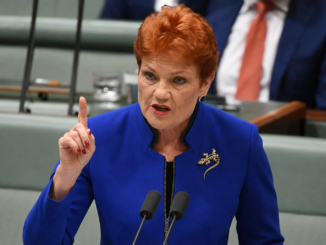
One Nation is proposing the most radical approach, seeking negative net migration during its first three years in government. The Coalition wants to more than halve net migration temporarily to 100,000 a year, while the Labor government is aiming for 225,000 annually by 2028.
ONE NATION: NEGATIVE NET MIGRATION FOR THREE YEARS
One Nation has proposed the deepest cuts.
The party wants to reduce net migration by around 750,000 people over its first three years, with the aim of reaching a point where more people leave Australia than arrive.
Spread across those years and based on current Treasury forecasts, the policy would effectively result in net migration of around negative 25,000 a year.
After that initial period, One Nation would seek to maintain annual net migration below 130,000.
International students would be one of the main targets.
The party proposes restricting international student visa places to just over 100,000 a year, compared with approximately 290,000 student visas granted during the previous financial year.
Visas for family members and dependants of international students and skilled migrants would also be severely restricted.
One Nation also wants to address the large number of people currently living in Australia on bridging visas, while increasing removals of visa overstayers and other unlawful non-citizens.
COALITION: 100,000 NET MIGRANTS FOR TWO YEARS
The Coalition is proposing a less extreme but still significant reduction.
Its plan would bring net migration down to 100,000 a year for two years, before increasing it to 130,000 in the third year and 160,000 in the fourth.
After that, migration levels would be linked to the number of new homes being completed.
The idea is to create a closer relationship between population growth and Australia’s capacity to provide housing.
International education would also face significant changes.
The Coalition proposes reducing international student commencements from the current planning level of around 295,000 to 240,000 a year.
Another major proposal is the abolition of the Temporary Graduate Visa, subject to limited exceptions.
More than 100,000 of these visas are issued each year, allowing many international graduates to remain and work in Australia for up to several years after completing their studies.
The Coalition argues that the program has increasingly become a pathway towards permanent residency rather than a mechanism for retaining graduates in sectors where Australia needs skilled workers.
It also wants to substantially reduce the more than 400,000 people on bridging visas, largely by requiring subsequent visa applications to be lodged offshore.
The permanent humanitarian program would also be cut from 20,000 to 10,000 places a year, although the government would retain the ability to temporarily increase the intake in response to major international crises.
At the same time, the Coalition says it wants to protect skilled migration, with workers in the construction sector receiving particularly high priority.
LABOR: TARGET OF 225,000 BY 2028
Labor is proposing a more gradual reduction.
Home Affairs Minister Tony Burke has announced measures aimed at bringing net migration down to 225,000 people a year by 2028.
That figure had already appeared in federal budget forecasts, but the government is increasingly treating it as a firm migration target.
One of Labor’s main measures targets so-called visa hopping, where international students remain in Australia by repeatedly enrolling in new courses.
Under the proposed changes, students would generally need to move to a higher level of study to qualify for another student visa — for example, progressing from a bachelor degree to a master’s degree.
The government is also restricting some family visas for international students, while maintaining exemptions for certain groups, including PhD students and people from parts of the Pacific and South-East Asia.
Labor does not intend to apply the same restrictions to the families of skilled workers, arguing that doing so could make Australia less attractive to professionals needed in industries already facing shortages.
CHANGES TO WORKING HOLIDAY VISAS
The Labor government is also tightening access to extended Working Holiday visas.
Second-year places would be reduced by around 12,000 to 45,000, while third-year places would fall by about 31,000 to just 5,000.
A ballot system would determine who is able to extend their stay.
The Coalition and One Nation are taking a different position on working holiday makers, reflecting the importance of these workers to farms and regional communities.
100 BORDER FORCE OFFICERS TO TARGET OVERSTAYERS
The federal government is also establishing a team of 100 Australian Border Force officers to strengthen efforts to remove people who have overstayed their visas.
Around 77,000 visa overstayers are estimated to be living in Australia.
Additional facilities are also planned to accommodate people awaiting removal from the country.
The government says the objective is to improve enforcement while continuing to attract skilled workers needed by the Australian economy.
THE SKILLED WORKER DILEMMA
This remains one of the most difficult parts of the migration debate.
Reducing migration also means reducing the supply of workers.
Healthcare, aged care, construction, agriculture and education are among the sectors already experiencing significant labour shortages.
Labor has therefore moved to give greater migration-processing priority to workers in construction, agriculture, fisheries and teaching.
The Coalition similarly argues that migration should not simply be cut across the board, but reshaped to bring in more workers with skills that Australia genuinely needs.
MIGRATION, HOUSING AND THE ECONOMY
Housing sits at the heart of the political debate.
Strong population growth has coincided with a serious shortage of affordable housing across much of Australia.
Rising rents, limited housing supply and rapid population growth have transformed migration from an economic issue into one of the country’s most politically sensitive subjects.
But cutting migration too quickly carries another risk: weakening an already slow-growing economy.
Population growth has made a significant contribution to Australia’s overall economic expansion in recent years.
Deep migration cuts could therefore ease pressure on housing while simultaneously worsening labour shortages and slowing economic activity.
That is the balance all three political forces are attempting to address — in very different ways.
Labor is proposing a gradual and more selective reduction. The Coalition wants an immediate cut combined with a stronger focus on skills. One Nation is proposing a far more dramatic break with Australia’s recent migration model.
Three very different policies, but one political message is becoming increasingly clear: Australia’s period of migration at the levels seen in recent years appears set to change.