Millennials increasingly back Pauline Hanson’s party while Labor struggles to sell its budget agenda to younger voters
Australia’s political landscape appears to be shifting dramatically, with younger voters showing growing dissatisfaction with the federal government and increasing support for Pauline Hanson’s One Nation party.
A new RedBridge poll, reported by ABC News, suggests that Labor’s latest federal budget has failed to resonate with key demographics it hoped to win over, particularly younger Australians struggling with housing affordability, rising living costs and economic uncertainty.
The findings present a troubling picture for Prime Minister Anthony Albanese and Treasurer Jim Chalmers, whose budget was designed around the concept of intergenerational fairness and improving access to home ownership.
Instead, the poll indicates that many younger voters remain unconvinced.
One Nation Gains Ground
According to the survey, One Nation has emerged as the most popular political party nationally, securing 31 per cent of the primary vote. Labor trails on 28 per cent, while the Coalition sits at 20 per cent.
Among millennials, the trend is particularly striking. One Nation now outpolls Labor, attracting 30 per cent support compared with Labor’s 28 per cent. The figures suggest a growing appetite among younger voters for alternatives to the traditional major parties.
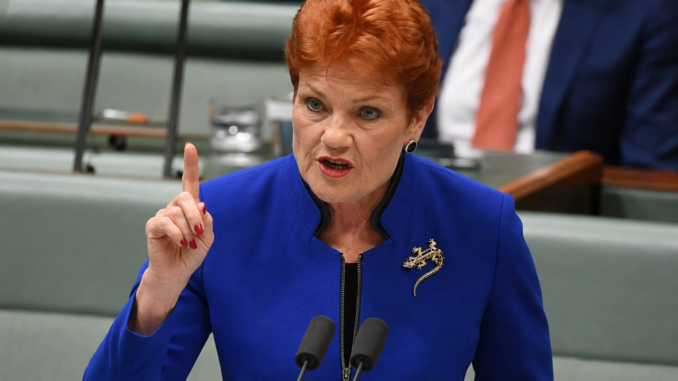
The poll also reveals that Generation X voters have become One Nation’s strongest support base. In a remarkable result, party leader Pauline Hanson was rated the preferred prime minister among Gen X respondents, outperforming both Albanese and Opposition Leader Angus Taylor.
Budget Message Failing to Connect
One of the most surprising findings is the apparent lack of engagement among younger Australians with the federal budget itself.
Only six per cent of Generation Z respondents said they had noticed “a great deal” about the budget, while nearly half admitted they had not paid much attention to it. Among those who were aware of its contents, many viewed it negatively.
RedBridge director Tony Barry argued that Labor is losing the public debate over its economic agenda.
“Those that do know about the budget, don’t like it,” Barry said, warning that the government has significant work to do if it hopes to rebuild support among younger Australians.
Housing Remains Central Issue
At the heart of Labor’s strategy is housing affordability, one of the most pressing concerns facing younger Australians.
The government argues that reforms to negative gearing and capital gains tax concessions will make it easier for first-home buyers to enter the market. Treasury modelling suggests home ownership has fallen significantly since tax changes introduced in 1999 encouraged greater investor activity.
Labor estimates its measures could allow approximately 75,000 additional first-home buyers to purchase property over the next decade.
However, many younger Australians remain sceptical. Financial influencers and social media commentators have criticised aspects of the reforms, particularly changes that may affect investment returns and share portfolios.
Growing Anti-Establishment Mood
The poll highlights what many political observers describe as a growing anti-establishment sentiment across Australia.
Rising housing costs, stagnant wage growth, concerns about productivity, and declining confidence in traditional political institutions appear to be fuelling voter frustration.
One Nation has successfully positioned itself as an alternative voice for Australians who feel ignored by both Labor and the Coalition.
Speaking recently, Hanson suggested she would not rule out a future bid for the House of Representatives, a move that could potentially position her for a more prominent national leadership role.
“There’s such an undercurrent that’s happening in this country,” Hanson said. “People are fed up and they want change.”
A Warning Sign for Canberra
While opinion polls are only a snapshot in time, the results are likely to be closely watched in Canberra.
For Labor, the findings suggest that economic policies designed to assist younger generations are not yet translating into political support. For the Coalition, the numbers indicate it too is struggling to reconnect with disillusioned voters.
The biggest winner, at least for now, appears to be One Nation.
As Australia grapples with housing pressures, cost-of-living concerns and broader economic uncertainty, the poll suggests many voters are increasingly willing to look beyond the traditional political establishment in search of solutions. Whether that trend continues could become one of the defining political stories leading into the next federal election.