
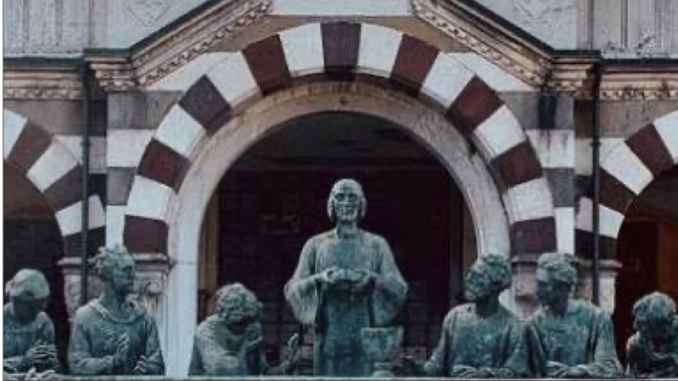
The Monumental Cemetery of Milan is far more than a place of remembrance. It is an open-air museum where art, history and collective memory converge, offering visitors a powerful and evocative journey through Italian culture.
Regarded as one of the largest and most significant cemeteries in the country, it is renowned for its monumental tombs, elaborate mausoleums and extraordinary sculptural heritage.
Designed by architect Carlo Maciachini and inaugurated on November 2, 1866, the cemetery was created to meet the growing needs of a modern city. It was conceived as a unified burial ground capable of accommodating citizens from all social classes while also providing a dignified resting place for Milan’s most prominent figures.
From the outset, the Monumental Cemetery was envisioned not merely as a functional space, but as a symbol of civic pride.
Architecturally, the complex is a striking blend of Neo-Gothic and Renaissance styles. Its imposing entrance is dominated by the Famedio, a grand structure that houses the tombs of celebrated Italians alongside cenotaphs dedicated to notable figures buried elsewhere.
The Famedio stands as both a gateway and a statement, underscoring the cultural importance of the site.
Walking along the cemetery’s tree-lined avenues, visitors encounter an astonishing variety of funerary monuments created by some of Italy’s most influential sculptors and architects.
Artistic styles range from Liberty and Neoclassicism to Eclecticism and Symbolism, reflecting the evolution of artistic taste between the 19th and 20th centuries. Works by masters such as Giannino Castiglioni, Luca Beltrami and Adolfo Wildt elevate the cemetery into a true artistic gallery.
The cemetery is divided into distinct sections, each with its own atmosphere. Older areas are characterised by neoclassical influences, with angels, Doric columns and triangular pediments inspired by Greco-Roman architecture.
Newer sections embrace Art Deco and modernist forms, highlighting the ongoing transformation of funerary art.
Among the most visited tombs are those of writer Alessandro Manzoni, conductor Arturo Toscanini, Nobel laureate Salvatore Quasimodo and aviation pioneer Enrico Forlanini.
Together, they make the Monumental Cemetery a unique place where memory, art and history endure side by side, continuing to attract visitors from around the world and confirming its role as a cultural landmark deeply woven into Milan’s urban and artistic identity.
More than a cemetery, it is a place of reflection, discovery and appreciation, where the stories of individuals become part of a broader narrative that continues to shape Italy’s cultural heritage.


Be the first to comment