The Australian government is preparing new legislation that would force platforms such as Meta and TikTok to give users aged over 16 the option to turn off algorithmic recommendations and use a more traditional following-based feed instead. The proposal, titled “My Feed, My Way”, forms part of a broader digital duty of care package and could expose companies to fines of almost $110 million if they fail to comply.
Australia is preparing another major intervention in the way social media platforms operate.
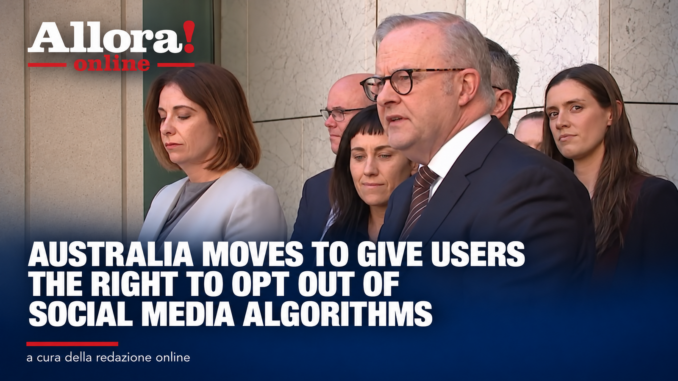
Prime Minister Anthony Albanese and Communications Minister Anika Wells have announced draft legislation that would require social media companies to give Australian users greater control over how content is selected and displayed.
The key measure would require platforms to notify users aged over 16 that they have the option to opt out of algorithm-driven feeds.
Instead, users could choose a feed based more directly on the accounts and pages they follow.
“My Feed, My Way”
The draft legislation has been titled “My Feed, My Way”.
Its central principle is that users should be able to decide whether they want social media platforms to recommend content based on their behaviour, preferences and online activity.
Wells said many Australians would still choose algorithmic feeds because they use them for entertainment, discovery or to support local businesses.
But under the proposed law, the decision would sit with the user rather than being the default imposed by the platform.
Companies that fail to properly inform users of the opt-out option could face penalties of almost $110 million.
A broader digital duty of care
The proposal goes beyond algorithms.
The government plans to introduce a new digital duty of care, placing greater responsibility on technology companies to identify and reduce risks to Australian users.
The package is aimed at harmful material including misogynistic content, pornography and content linked to eating disorders.
Platforms would also be required to document the steps they take to address risks and reduce harm.
The legislation would strengthen the powers of the eSafety Commissioner, including the ability to issue removal notices against so-called nudify applications and websites used to generate fake intimate images.
The government also wants to simplify existing systems dealing with child cyberbullying and adult cyber abuse.
Concerns about harmful recommendation systems
One of the main arguments behind the reform concerns the way recommendation algorithms can progressively direct users towards more extreme material.
Algorithms usually analyse a user’s activity and then serve content that is considered likely to keep them engaged.
Critics argue that this can sometimes create pathways towards harmful or misogynistic material, particularly for teenage boys and young men.
Teach Us Consent chief executive Chanel Contos has argued that stronger controls are needed to make it harder for platforms to design around new online safety rules.
She has described how a user can begin with apparently harmless content, such as fitness or motivational videos, before being pushed towards online communities often described as the manosphere.
Albanese rejects censorship claims
The proposal has already triggered political criticism.
The Liberals, Nationals and One Nation have raised concerns that tighter regulation of algorithms could amount to government interference in what Australians see online.
Albanese rejected that argument.
The government’s position is that the reform is not about allowing Canberra to decide what users can view, but about giving individuals greater control over their own feeds.
The distinction will be central to the political debate as the bill moves towards Parliament.
Coalition plans amendments
Shadow communications minister Sarah Henderson has argued that major changes to the operation of social media platforms require proper scrutiny and that the government should not dictate what Australians see online.
The Coalition is preparing amendments that would require technology companies to disclose more information about the factors and signals used by their recommendation systems.
It also wants protections for parental online safety tools.
Under the opposition’s proposal, social media companies would be prevented from interfering with software installed by parents to block harmful content, restrict websites and apps, or manage screen time.
The Coalition’s position is that parents should retain the primary role in deciding how their children are protected online.
Following the under-16 social media restrictions
The new proposal follows Australia’s earlier move to restrict social media access for children under 16.
Albanese has presented “My Feed, My Way” as the next stage of that regulatory agenda.
This time, however, the impact would extend well beyond minors.
The algorithm opt-out would apply to users aged over 16 and could directly change the way millions of Australians use platforms such as Facebook, Instagram and TikTok.
The bill is not yet law
The legislation has not yet been passed.
The government intends to introduce the bill to Parliament later this year, where it is expected to receive support from the Greens.
The final wording may still change during parliamentary debate, particularly if opposition amendments gain support.
If approved, the reform would mark a significant shift in Australian digital regulation.
Rather than focusing only on content moderation and child safety, the law would also intervene in one of the core features of social media platforms: the systems that decide what users see.